
Blog

2026 Best Refrigeration Condensing Unit Types?

Choosing the best Refrigeration Condensing Unit in 2026 requires more than comparing horsepower and price. Real performance depends on load patterns, ambient temperature, refrigerant compatibility, service access, and operating hours. A unit serving a busy supermarket faces different demands from one cooling a small restaurant walk-in. Door openings, product temperature, condenser airflow, and suction-line length can change the result.

This guide examines air-cooled, water-cooled, remote, semi-hermetic, scroll, and variable-speed condensing units. It considers where each type performs well and where it may create practical problems. Field technicians often notice details that brochures miss, such as difficult oil return, coil fouling, compressor noise, or limited access around a service panel. Small details matter.

Reliable selection should combine manufacturer data, installation experience, maintenance records, and verified efficiency ratings. Energy performance can look impressive under laboratory conditions, yet differ in a dusty plant room. That difference deserves attention. There is no universal best unit. A technically advanced model may be unsuitable when local servicing is limited or replacement parts take weeks to arrive.

The discussion also considers refrigerant requirements, control systems, climate conditions, lifecycle cost, and future expansion. Some recommendations may need revision as equipment standards and refrigerant policies develop. That uncertainty is real. Readers can use this overview to compare options carefully, question supplier claims, and identify the condensing unit that fits their actual facility rather than an idealized specification sheet.
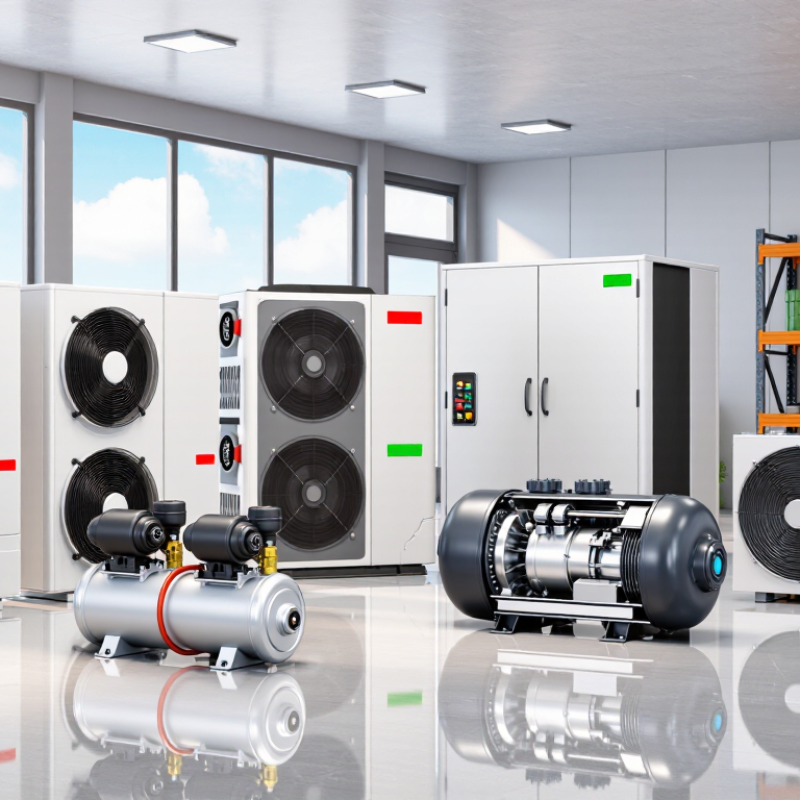
2026 Best Refrigeration Condensing Unit Types?

Refrigeration Condensing Units: Definition, Purpose, and Core Components

2026 Best Refrigeration Condensing Unit Types?

A refrigeration condensing unit is the outdoor mechanical package that removes heat from a refrigerated space. It normally combines a compressor, condenser, receiver, fan, controls, and service valves. The compressor raises refrigerant pressure. The condenser then releases heat and changes vapor into liquid. In a cold room, this process supports stable product temperatures and reduces spoilage risks.

The International Institute of Refrigeration estimates that refrigeration uses about 17% of global electricity. The IEA’s Future of Cooling report also warns that cooling demand could more than triple by 2050. These figures make condensing-unit efficiency a practical concern, not a decorative specification. Air-cooled units suit many warehouses because installation is simple. Water-cooled units can perform better in hot conditions, but they need water treatment and reliable supply. Evaporative designs may improve efficiency, though maintenance becomes less forgiving.

Selection should begin with load, evaporating temperature, ambient temperature, refrigerant, and operating hours. Scroll compressors can suit smaller loads. Semi-hermetic reciprocating compressors offer serviceability. Screw compressors often fit larger, steady-duty systems.

Field inspections frequently find undersized receivers, blocked condenser fins, or poor airflow. Small details matter. A neat selection chart can mislead. Real sites have doors opening, frost forming, and ambient temperatures changing hourly. Engineers should verify capacity under actual conditions and check noise, controls, defrost strategy, and regulatory refrigerant requirements before approval.

How Refrigeration Condensing Units Work in Different Cooling Systems

2026 Best Refrigeration Condensing Unit Types?

Refrigeration condensing units transfer indoor heat outdoors through a controlled vapor-compression cycle. The compressor raises refrigerant pressure and temperature. The condenser then rejects heat. Liquid refrigerant travels through the expansion device before entering the evaporator. There, it absorbs heat from a display case, cold room, or process vessel.

Air-cooled units reject heat through finned coils and fans. They suit supermarkets, walk-in freezers, and small commercial systems with limited water access. Water-cooled units use a condenser and water circuit. They perform steadily in hot spaces, but require water treatment and reliable pumps. Evaporative designs can reduce condensing temperatures, although maintenance becomes more demanding. The choice is contextual. A “best” unit can become inefficient when airflow, ambient temperature, or load changes.

IEA’s The Future of Cooling reports that cooling electricity demand could more than triple by 2050 without stronger efficiency measures. That report focuses mainly on space cooling, but it highlights a wider design pressure. UNEP’s 2023 Global Cooling Watch also links efficient cooling with lower energy demand and emissions. Engineers should therefore match condensing capacity with actual load, not only compressor horsepower.

Tips: Check summer ambient design temperature, evaporator temperature, refrigerant compatibility, airflow, and service clearance. Log suction and discharge pressures during commissioning. Small errors matter. Oversizing may cause short cycling, poor humidity control, and unnecessary cost. Even experienced installers should review the selection when doors, products, or operating hours change.

2026 Best Refrigeration Condensing Unit Types

Refrigeration condensing units remove heat from the refrigerant and reject it to air, water, or the atmosphere through evaporation. The chart shows representative heat-rejection temperature approaches used in common refrigeration designs.

A lower temperature approach generally supports better system efficiency, but the actual value depends on ambient conditions, condenser cleanliness, airflow or water flow, refrigerant selection, load profile, and control settings. Air-cooled units are widely used for simple installation, water-cooled units are suitable where a reliable water circuit is available, and evaporative units can achieve a lower approach in dry climates by using the cooling effect of water evaporation.

Major Condensing Unit Types for Commercial and Industrial Refrigeration

2026 Best Refrigeration Condensing Unit Types?

Commercial and industrial refrigeration systems rely on condensing units to reject heat and maintain stable storage conditions. An air-cooled unit uses ambient air across condenser coils, making installation relatively simple. It suits supermarkets, walk-in coolers, and outdoor applications where water is limited. However, high summer temperatures can reduce capacity and increase discharge pressure. Keep airflow clear. Field checks matter.

Water-cooled units transfer heat through a water circuit and often perform steadily in warm climates. They need pumps, strainers, water treatment, and reliable drainage. Without maintenance, scale can insulate tubes and quietly raise energy use.

Evaporative condensing units combine air movement with controlled water evaporation. They can deliver lower condensing temperatures, especially in dry regions. Humidity changes the result. That detail is easy to miss.

Compressor design also separates major unit types. Scroll compressors are compact and smooth, while semi-hermetic reciprocating compressors support serviceable commercial installations. Screw compressors fit larger industrial loads and long operating hours. Selection should follow refrigerant compatibility, cooling load, ambient conditions, noise limits, and maintenance access.

I have seen oversized units cycle frequently, causing unstable temperatures and unnecessary wear. The “best” type is rarely universal. A measured site survey is more valuable than a generic capacity table.

How to Compare Condensing Units by Capacity, Refrigerant, and Efficiency

When comparing refrigeration condensing units, start with the actual cooling load, not the catalog capacity. Measure product load, room temperature, ambient conditions, defrost heat, and line losses. A unit rated at 10 kW may deliver less capacity during a 38°C summer afternoon. Oversizing also causes short cycling, unstable suction pressure, and unnecessary wear. Select capacity near the calculated design load, then verify performance at the evaporating and condensing temperatures you will actually use.

Refrigerant choice affects efficiency, service procedures, and future compliance. The UNEP 2022 Assessment Report links the Kigali HFC phasedown with potential warming reductions of up to 0.4°C by 2100. Compare GWP, pressure, temperature glide, oil compatibility, and safety classification. Efficiency needs more than one headline number. Check COP, power input, seasonal performance, and part-load behavior. The IEA reports that cooling demand could more than triple globally by 2050, making small efficiency differences important across long operating hours. Field readings still matter. Published laboratory values may not match a dusty condenser or restricted airflow.

Tips: Request capacity tables at your design conditions. Compare kWh per operating hour, not only purchase price. Confirm controls, receiver size, sound levels, and service access. Leave room for uncertainty; load calculations can be wrong. A short commissioning test, including suction pressure, discharge temperature, and electrical input, often reveals more than a brochure. Industry reports provide direction, but site data should make the final decision.

Choosing the Best Condensing Unit for 2026 Refrigeration Applications

2026 Best Refrigeration Condensing Unit Types?

Choosing the Best Condensing Unit for 2026 Refrigeration Applications

In 2026, condensing unit selection begins with the application, not the catalogue price. A small food store may need a quiet air-cooled unit for limited outdoor space. Air-cooled systems are simpler to install and maintain. Water-cooled units can perform efficiently in warm climates, but they need reliable water treatment. Evaporative designs may reduce condensing temperatures. They also require careful attention to water quality and maintenance.

Compressor style matters just as much. Scroll compressors suit stable loads and compact systems. Semi-hermetic reciprocating compressors offer practical service access for many medium-temperature applications. Screw compressors can support larger cooling demands and longer operating cycles. Field service records often reveal the same issue: an oversized unit cycles too frequently. That wastes energy and increases wear. Bigger is not always better.

The selected refrigerant must match the equipment design, safety requirements, and local regulations. Lower-impact refrigerants may support future compliance, but technicians need suitable tools and training. Ask for verified efficiency data at the actual evaporating and condensing temperatures. Check sound levels, ambient operating limits, oil management, controls, and spare-part access. A unit that performs well in a test room may struggle beside a hot loading dock. I would not ignore installation quality, either. Even a well-designed system can disappoint when airflow is restricted or commissioning is rushed.