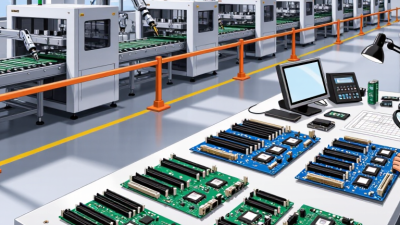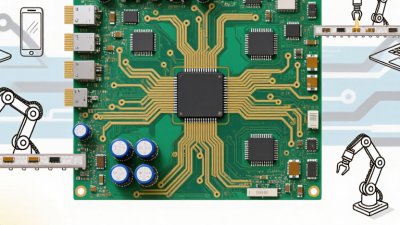
Choosing a reliable fast turn pcb supplier in 2026 requires more than comparing advertised delivery dates. Engineers must examine production capability, inspection methods, communication, and real project experience. A supplier may promise five-day delivery, yet hidden review delays can extend the schedule. Ask how quickly design files are reviewed, clarified, and released to production.
Look for evidence, not polished claims. Review certifications, material options, layer-count experience, and sample inspection reports. A dependable manufacturer should explain impedance control, solder mask alignment, copper thickness, and surface finish clearly. It should also identify risks before fabrication begins. For example, a cramped trace near a plated hole may pass software checks but create manufacturing concerns. Experienced engineers will usually suggest practical adjustments.
Communication matters during urgent builds. Can the supplier answer technical questions within hours? Does it provide clear order status, inspection images, and shipment tracking? These details reduce uncertainty when prototypes must reach a testing bench on schedule. Still, speed should not replace quality. A rushed board with warped edges or inconsistent plating can cost more than a delayed prototype. That lesson is easy to overlook.
This guide explains how to compare fast turn pcb suppliers with greater confidence. It considers capability, quality control, pricing transparency, and delivery reliability. No supplier is perfect. Even a strong manufacturer may experience material shortages or unexpected design questions. The better choice is usually the supplier that communicates problems early and offers workable solutions. That standard supports reliable prototypes and smoother production decisions.

A fast-turn PCB supplier produces printed circuit boards within a compressed schedule, often from a few days to two weeks. The service covers more than quick fabrication. It usually includes engineering review, material preparation, drilling, plating, solder-mask application, testing, and delivery coordination. Speed begins with a controlled workflow.
In practice, a reliable supplier confirms layer count, board thickness, copper weight, surface finish, and minimum trace spacing before production. Engineers should review Gerber files and drill data for missing information. A capable team can identify an unconnected net or an unsuitable via size before fabrication starts. That check has saved development teams from costly rework. Ask for measurable lead times, not vague promises. Production capacity, inspection equipment, and documented quality procedures also matter.
Fast turn does not mean every board can be rushed safely. Complex multilayer designs, unusual materials, impedance requirements, or tight tolerances may need more time. I have seen schedules fail when a design was technically complete but lacked clear fabrication notes. That mistake is easy to repeat. A trustworthy supplier explains limitations, reports deviations quickly, and provides electrical testing or inspection records when required. Prototype orders should also reveal communication quality. Short replies help, but precise replies help more.
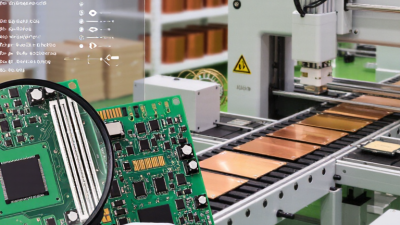
A fast-turn PCB supplier is a manufacturer that reduces the time from design-file approval to finished boards by prioritizing engineering review, material sourcing, fabrication, and testing. The chart shows typical industry lead-time ranges for common order types, measured in business days.
Typical industry benchmark ranges only. Actual lead time depends on layer count, board size, materials, surface finish, testing requirements, quantity, and design readiness.
When choosing a fast-turn PCB supplier in 2026, define the board specification first. Speed cannot repair unclear requirements. State the layer count, finished dimensions, copper weight, minimum trace and space, hole sizes, and material class. Include impedance targets, surface finish, solder mask color, and panelization details. These choices directly affect tooling, yield, and delivery time.
Industry data supports this discipline. The 2024 Prismark market report valued global PCB sales at roughly US$75 billion, showing a highly competitive production environment. IPC’s PCB Technology Trends Study also highlights rising demands for HDI, finer geometries, and tighter electrical control. A supplier may promise 48-hour production, but that promise means little without controlled design data. From practical quoting experience, missing stack-up information causes avoidable revisions. I have made that mistake before. A fast estimate can still be wrong.
Tips: Prepare a one-page specification sheet and attach approved fabrication files. Mark critical dimensions clearly. Ask for the supplier’s minimum capabilities, actual queue time, inspection method, and engineering review process. Confirm whether the quoted lead time includes drilling, plating, testing, and shipping. Do not define speed alone. Define acceptable yield and performance. A cheaper shortcut may create hidden rework. Also, request a pre-production question list. Small questions often reveal large manufacturing risks.
How to Choose a Fast Turn PCB Supplier in 2026
A fast quote is not the same as fast delivery. Evaluate the complete cycle: engineering review, material sourcing, fabrication, testing, and shipment. IPC’s 2024 PCB Industry Results tracks monthly sales and bookings through the book-to-bill ratio, showing why market capacity can change quickly. Ask suppliers for recent average lead times, not their best-case promise. Request evidence from similar board types, layer counts, and quantities.
Quality must remain measurable under pressure. Check whether the supplier follows IPC-A-600 acceptance criteria and uses documented inspection records. Ask for test coverage, traceability, solder-mask controls, and corrective-action reports. A capable supplier should explain how it handles impedance, via reliability, and material substitutions. Technology matters too. Confirm access to automated optical inspection, flying-probe testing, impedance testing, and controlled-depth drilling. The Global Electronics Association’s industry outlook continues to identify supply-chain resilience and advanced manufacturing capacity as major electronics priorities. Speed without process control can become an expensive delay.
Tips: Send complete Gerber files, drill data, stack-up details, and approved material requirements. Ask for a written schedule with milestone dates. Compare three recent production examples. One uncomfortable question helps: what caused the last missed deadline? Be cautious if the answer sounds perfect. Real factories have exceptions, rework, and learning curves. I would also verify capacity directly, because a supplier may quote quickly while outsourcing critical steps. That is not automatically wrong, but it needs clear disclosure.
Choosing a fast-turn PCB supplier requires more than comparing the lowest quote. Grand View Research valued the global PCB market at US$89.7 billion in 2023, with projected growth of 5.6% annually through 2030. Rising demand can pressure capacity and pricing.
Request a line-by-line quotation. Include tooling, engineering charges, testing, freight, and remake terms. Compare the same stack-up, copper weight, surface finish, and panel utilization. A cheaper board may hide higher shipping costs or weaker yield controls. Ask for recent delivery performance, not only promised lead time. Numbers matter.
Review ISO 9001 certification, audit dates, and certificate scope. For product quality, check IPC-A-600 acceptance criteria and documented inspection records. IPC’s 2024 technology roadmap highlights tighter geometries and advanced interconnect requirements, so basic certification may not prove HDI capability. Ask for monthly capacity by technology, not one total figure. Confirm available drilling, imaging, plating, and electrical-test capacity. A factory may claim thousands of panels monthly while its HDI line remains full. That distinction is easy to miss. Small trial orders can reveal communication gaps, warpage, and inconsistent solder-mask registration. I would also request three recent on-time delivery samples, although suppliers may resist sharing them.
Use this comparison framework to evaluate fast-turn PCB suppliers by total landed cost, manufacturing capability, certification coverage, delivery performance, and production scalability.
| Evaluation Dimension | Prototype-Focused Supplier | Balanced Quick-Turn Supplier | High-Volume Production Supplier | What to Verify Before Ordering |
|---|---|---|---|---|
| Typical Order Profile | 1–20 boards, engineering samples, design validation | 20–1,000 boards, pilot runs, new product introduction | 1,000+ boards, recurring production, contract manufacturing support | Whether the supplier’s normal order size matches your project stage |
| Indicative 2-Layer Prototype Price | US$5–15 per board for small quantities, excluding shipping and tooling | US$8–25 per board for small quantities, depending on specifications | Usually less competitive for very small quantities because of minimum order and setup costs | Board size, quantity, copper weight, surface finish, shipping, tooling, and taxes |
| Indicative 4-Layer Prototype Price | US$20–60 per board for standard specifications | US$25–90 per board depending on stack-up, material, and delivery speed | Often optimized for batch production rather than one-off prototypes | Material grade, controlled impedance, via structure, finish, and panel utilization |
| Fastest Standard Turnaround | 24–72 hours for selected 2-layer designs | 3–7 working days for common multilayer designs | 7–15 working days for production lots, subject to capacity planning | Whether quoted lead time includes engineering review, fabrication, testing, and shipping |
| Emergency Expedited Service | Strong Often available for simple boards and limited quantities |
Available Usually requires engineering approval and capacity confirmation |
Limited May conflict with scheduled production batches |
Written confirmation of the expedited schedule and surcharge |
| Standard Layer Capability | 2–8 layers | 2–16 layers | 2–24 or more layers, depending on facility capability | Maximum finished thickness, minimum dielectric thickness, and layer-count limits |
| Typical Minimum Track / Spacing | Approximately 0.15–0.20 mm for standard quick-turn work | Approximately 0.10–0.15 mm for standard production | Approximately 0.075–0.10 mm on qualified processes | Fabrication capability table, design rules, and yield assumptions |
| Via Technology | Through-hole and standard plated vias; limited microvia support | Through-hole, blind vias, and selected microvia structures | Through-hole, blind/buried vias, microvias, and sequential lamination | Registration tolerance, aspect ratio, via fill, and reliability testing |
| Material Options | FR-4, lead-free compatible laminates, and selected high-temperature materials | FR-4, high-Tg materials, halogen-free materials, and controlled-impedance laminates | Wide material portfolio including high-frequency, flexible, rigid-flex, and high-Tg materials | Material datasheets, dielectric constant, Tg, Td, CTE, and traceability |
| Surface Finish Options | HASL, lead-free HASL, and ENIG | Lead-free HASL, ENIG, immersion silver, and OSP | ENIG, ENEPIG, immersion silver, OSP, hard gold, and selective finishes | Finish thickness, solderability requirements, wire-bonding needs, and shelf life |
| Impedance Control | Available on request for straightforward designs | Routine Supported with stack-up planning and test coupons |
Advanced Suitable for high-speed and high-density designs |
Impedance calculator, stack-up approval, test coupon policy, and tolerance range |
| Quality Certifications | Typically ISO 9001; additional certifications vary by facility | ISO 9001 and commonly ISO 14001; automotive or medical scope may be available | ISO 9001, ISO 14001, IATF 16949, ISO 13485, or sector-specific approvals may be available | Certificate validity, issuing body, site address, and certified scope |
| Environmental Compliance | RoHS and REACH declarations commonly available | Commonly Supported RoHS, REACH, and halogen-free options |
Broad Coverage Material declarations and controlled-substance documentation |
Current compliance declarations and homogeneous-material reporting |
| Quality Inspection | Automated optical inspection, electrical test, and visual inspection | AOI, electrical test, solderability checks, dimensional inspection, and first-article review | AOI, flying-probe or fixture testing, X-ray, microsection analysis, reliability testing, and SPC | Inspection plan, acceptance criteria, test coverage, and inspection records |
| Production Capacity | Best suited to low-volume orders; capacity may fluctuate during peak periods | Moderate capacity with dedicated quick-turn scheduling | High capacity with multiple production lines and formal capacity planning | Monthly output, line utilization, bottleneck processes, and backup equipment |
| On-Time Delivery Expectation | Approximately 85–95% for standard prototype orders when files are complete | Approximately 90–97% with approved stack-up and stable material availability | Approximately 90–98% under forecast-based production planning | Definition of on-time delivery, historical performance, and delay escalation process |
| Engineering Support | Basic design-rule review and manufacturability feedback | DFM review, stack-up consultation, impedance planning, and panelization support | Advanced DFM, yield improvement, process optimization, and design-for-cost support | Response time, review checklist, engineering ownership, and revision control |
| Best-Fit Use Case | Early prototypes, university projects, low-risk functional testing, and quick design iterations | Engineering validation, pilot production, product launches, and mixed-volume programs | Regulated products, stable recurring demand, complex multilayer boards, and cost-sensitive mass production | Match supplier capability to risk level, annual volume, compliance needs, and launch schedule |
| Overall Selection Rating | Best for Speed and Low Volume | Best Overall Balance | Best for Scale and Complexity | Request comparable quotations using identical Gerber files, specifications, Incoterms, and delivery requirements |
Before placing an order, verify how the supplier controls quality under pressure. Request a recent sample with the same layer count, material, finish, and tolerance as your design. Inspect edge quality, solder mask alignment, hole registration, and surface cleanliness. Ask for cross-section images and electrical test records. A polished website proves very little.
Reliable suppliers explain their process clearly. They should review your Gerber files, identify possible DFM risks, and confirm stack-up details before production. Ask who performs AOI, flying-probe testing, and final inspection. Check whether materials have batch records and whether defective boards can be traced to production data. Certifications matter, but current inspection evidence matters more. Ask for both.
Communication is another practical test. Send several technical questions and measure the response quality, not only the response speed. Request a written timeline covering engineering review, fabrication, testing, and shipping. Confirm how delays, redesigns, and rejected boards are handled. Vague promises are warning signs. So are unusually low quotations.
One lesson deserves attention: fast delivery can hide rushed verification. I would rather lose one day reviewing a sample than lose a week replacing an unstable batch. Still, sample results can be misleading if production controls change later. Ask whether the same equipment, materials, and inspection steps will be used for the full order. Get that answer in writing.