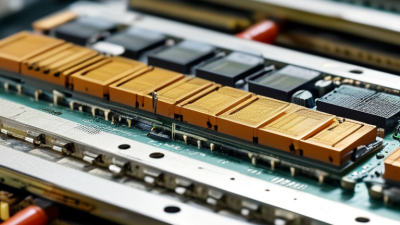
When production schedules tighten, a dependable quick turn pcb supplier can protect an entire product launch. A missed prototype window may delay firmware testing, enclosure fitting, and customer demonstrations. The best supplier is not always the cheapest. It is the one that matches speed, layer count, material, inspection, and shipping reliability.
Industry data supports this pressure. Prismark’s global PCB market reports track a highly cyclical sector shaped by semiconductor demand, automotive electronics, telecommunications, and computing investment. IPC’s PCB industry reports also show that order activity and lead times can change quickly across regions. These reports suggest a practical lesson: buyers should compare current capability, not rely only on old supplier rankings.
Dr. Hayao Nakahara, a widely cited PCB market analyst, described the industry as “a barometer of the electronics industry.” That perspective matters for global buyers. A supplier serving consumer prototypes may not handle impedance-controlled backplanes or high-temperature automotive designs equally well. Certification claims also require careful checking. ISO registration, UL recognition, material traceability, and electrical testing should appear in verifiable documentation.
This guide reviews seven quick turn pcb suppliers for international purchasing teams. It considers quoted lead time, prototype flexibility, engineering communication, fabrication standards, and logistics support. Some suppliers may excel in two-layer boards but struggle with dense HDI work. That limitation is easy to miss.
Real-world buying is imperfect. A fast quotation can hide revision confusion, unclear tolerances, or expensive shipping. Buyers should request sample reports, confirm stackups, and test communication before placing urgent orders.

Quick-turn PCB production means more than placing a rush order. It usually covers fabrication within 24–72 hours after design approval. Assembly, shipping, and engineering revisions may require additional time. A 2024 global PCB market report estimated industry value near US$76 billion, with mid-single-digit growth expected through 2029. That pressure rewards suppliers with stable processes, not only fast quotations.
IPC-6012 provides performance and qualification requirements for rigid printed boards. Buyers should request the applicable revision, board class, material system, copper thickness, and acceptance criteria. A compliant supplier should provide impedance records, electrical test results, laminate traceability, and cross-section data when required. Ask about drill registration too. Tiny annular rings can fail during manufacturing.
In practical sourcing, I compare the promised clock with the real production route. Can the supplier reserve standard laminates today? Is solder mask color restricted? Are controlled-impedance coupons included? These details often decide whether a 48-hour build is realistic. IPC workmanship guidance and supplier inspection records add useful evidence, but they do not replace independent design review. That assumption is easy to miss.
A 24-hour quote may hide queue time, tooling, or customs delays. I have seen impressive build claims weaken when files contain unclear stackups. Provide complete Gerbers, drill files, fabrication notes, and revision control. Then verify first-article measurements before releasing larger quantities. Fast is valuable. Predictable is better.

7 Best Quick Turn PCB Suppliers for Global Buyers
Global buyers should compare more than advertised delivery speed. Layer count affects routing, impedance control, drilling complexity, and inspection time. Ask whether the supplier has produced your required layer structure before. A 0.1-mm trace and space requirement needs stable imaging, clean copper plating, and verified design-rule control. Request a capability table, sample reports, and cross-section images. Do not accept vague claims.
Tips: Confirm the minimum order quantity before sending files. A low MOQ helps prototypes, while volume orders need price breaks and consistent batch control. Check whether the quoted lead time includes engineering review, production, testing, and shipping. Ask for clear tolerance limits.
Certifications can reveal process discipline, but certificates alone do not guarantee a reliable board. Check their validity, covered facility, and quality scope. For global shipments, confirm material compliance documents and inspection records. I have found that suppliers with quick replies are not always quick manufacturers. Sometimes, a slower technical review prevents costly rework. That matters.
Request a first-article inspection before approving larger quantities. Review solder mask alignment, hole sizes, surface finish, and electrical test results. Keep communication in writing, especially for revisions. A supplier may meet 0.1-mm spacing on one panel but struggle across repeated batches. This is where production evidence matters more than an impressive website.
7 Best Quick Turn PCB Suppliers for Global Buyers
Seven supplier profiles help buyers compare lead times, PCB types, regions, and service scope. Supplier A serves North America with two-to-five-day prototypes, mainly two-layer and four-layer boards. Supplier B supports Europe and offers quick-turn rigid, flex, and rigid-flex production. Its engineering review includes stack-up checks and drill validation. Supplier C operates across East Asia and focuses on high-volume multilayer boards. Prototype delivery may take five to eight days. Supplier D serves Southeast Asia with fast single-layer and double-layer boards for control panels and testing equipment.
Supplier E supports the Middle East and Africa through regional logistics partners. It handles small batches, impedance-controlled boards, and assembly coordination. Supplier F covers Australia and nearby markets, offering online quotations and ten-day production for selected designs. Supplier G works with global buyers needing mixed technology, including surface-mount assembly, testing, and inspection reports. Actual lead times depend on material availability, file quality, and shipping routes. Schedules are estimates, not promises. That matters.
Tips: Request a written lead-time breakdown. Separate fabrication, assembly, inspection, and freight. Ask whether the quote includes engineering review and electrical testing. Confirm certifications, material grades, copper weight, and acceptance criteria before payment. A polished website proves little. Request recent sample records or anonymized inspection evidence. Compare service scope, not only price. I have seen “quick” orders slow down after unclear drill files, so review every note carefully.
| Supplier Profile | Primary Service Region | Typical Quick-Turn Lead Time | PCB Types Commonly Offered | Typical Board Capabilities | Engineering and Production Services | Best Fit for Global Buyers |
|---|---|---|---|---|---|---|
| Profile 1 — High-Volume Asian Quick-Turn Manufacturer | East Asia; exports worldwide | 2–5 working days for simple prototypes | 2-layer FR-4 4-layer FR-4 Rigid-flex Aluminum-core | Prototype and low-to-medium-volume production; standard 1.6 mm boards; lead-free HASL, ENIG, and OSP finishes; common copper weights from 1 to 3 oz. | DFM review, impedance-control options, electrical testing, stencil supply, component sourcing, PCB assembly, and international shipment consolidation. | Buyers seeking competitive pricing, broad material options, and a single source for bare boards plus assembly. |
| Profile 2 — European Prototype and NPI Specialist | Western and Central Europe | 3–7 working days for standard prototypes | 2–12 layer rigid HDI Flex Rigid-flex | Fine-pitch and controlled-impedance designs; multilayer prototypes; halogen-free and high-temperature laminate options; traceability-oriented production. | Design-for-manufacturing feedback, prototype consultation, material verification, test coupons, assembly, inspection, and documentation support. | Engineering teams that value regional communication, compliance documentation, and rapid design iterations. |
| Profile 3 — North American Rapid Prototype Partner | United States and Canada; international delivery available | 3–8 working days for standard rigid boards | 2-layer rigid 4-layer rigid RF/microwave Metal-core | Prototype quantities and small batches; standard FR-4, high-frequency laminates, and thermal-management boards; surface finishes selected by application. | Online quotation, DFM checks, impedance review, quick-turn fabrication, SMT and through-hole assembly, functional testing, and domestic logistics. | Local design groups, university laboratories, and industrial developers requiring short communication cycles in North American time zones. |
| Profile 4 — Cost-Optimized Multilayer Production Supplier | East and Southeast Asia; global export network | 5–10 working days for multilayer prototypes | 4–20 layer rigid HDI High-TG FR-4 Heavy copper | Multilayer boards for industrial electronics; sequential lamination options; higher copper weights; ENIG, immersion tin, OSP, and lead-free HASL availability. | Gerber and ODB++ review, stack-up consultation, controlled impedance, automated optical inspection, flying-probe testing, and volume ramp-up. | Purchasers moving from prototypes to repeat production and prioritizing unit cost, capacity, and scalable manufacturing. |
| Profile 5 — Flexible and Rigid-Flex Technology Specialist | East Asia; serves aerospace, medical, and consumer markets globally | 7–15 working days for flex and rigid-flex prototypes | Single-sided flex Double-sided flex Multilayer flex Rigid-flex | Polyimide-based flexible circuits; stiffeners, coverlays, plated through-holes, fine-pitch features, and bend-area design controls. | Bend-radius guidance, stack-up engineering, DFM analysis, material selection, laser processing, assembly support, and reliability documentation. | Designers needing space-saving interconnects, repeated bending performance, or integration between rigid and flexible sections. |
| Profile 6 — Certified Automotive and Industrial PCB Manufacturer | Europe and Asia; multinational supply programs | 7–14 working days for qualified prototype builds | Automotive rigid High-TG multilayer Thick copper Metal-backed | Boards designed for vibration, thermal cycling, and demanding operating environments; controlled materials, process records, and production traceability. | NPI support, process qualification, microsection analysis, electrical testing, reliability testing coordination, assembly, and supply-chain documentation. | OEMs and contract manufacturers requiring repeatability, quality systems, and documented production controls rather than only the lowest prototype price. |
| Profile 7 — Integrated PCB Assembly and Global Fulfillment Provider | Asia-based manufacturing with North American and European logistics | 5–10 working days for bare-board prototypes; 7–15 working days with assembly | Rigid FR-4 Multilayer Flex Aluminum-core | Prototype through medium-volume builds; standard and high-TG laminates; SMT footprints, through-hole components, thermal boards, and common lead-free finishes. | PCB fabrication, BOM review, component procurement, SMT and through-hole assembly, X-ray inspection, programming, box-build integration, and drop-shipping. | Start-ups and international product teams that want fabrication, assembly, sourcing, testing, and fulfillment managed through one supplier. |
Comparing seven quick-turn PCB suppliers requires more than reading their advertised lead times. Global buyers need consistent data. I compared identical four-layer prototype specifications, including board size, copper weight, surface finish, and quantity. Prices varied widely, from budget offers with limited inspection to higher quotes including electrical testing. The cheapest quote was not always the strongest value.
On-time delivery showed a similar pattern. Some suppliers shipped within five working days, while others needed eight or nine. I checked production updates, packing dates, and tracking activation rather than trusting promises alone. That method exposed small delays caused by engineering questions and holiday backlogs. Communication mattered. A supplier that answered technical questions within one business day reduced avoidable schedule risk.
Quality evidence included cross-section reports, solder-mask consistency, hole alignment, and final inspection records. Minor color variation appeared on one sample, although the boards remained functional. That detail deserves attention. Shipping performance depended on destination, customs handling, and packaging strength. Vacuum-sealed moisture protection helped prevent surface oxidation during long transport. Express shipping was faster, but not always predictable. Air-cargo handoffs created unexpected tracking gaps. Buyers should compare delivered cost, confirmed production capacity, inspection coverage, and actual arrival dates. A practical spreadsheet often reveals more than a polished sales page.
Quick-turn PCB buying is not simply a race for the shortest delivery promise. The right supplier must match your volume, board complexity, compliance duties, and risk tolerance. A two-layer prototype may need fast fabrication and basic electrical testing. A controlled-impedance board needs tighter process documentation, test coupons, and clear engineering communication.
Build a shortlist of seven qualified suppliers, then compare evidence instead of slogans. Check IPC process controls, material traceability, RoHS or REACH documentation, inspection records, and electrical test coverage. Ask how the supplier handles revised Gerber files, unclear drawings, and failed incoming materials. Their answers reveal practical experience. Certificates alone are not enough.
Turnaround should include engineering review, production queue time, testing, packaging, and shipping. Request a dated schedule, not only “24-hour production.” For global orders, confirm customs documents, export packaging, and regional delivery options. A small pilot order can expose solder-mask flaws, warped panels, weak labeling, or slow responses before larger spending begins. That step feels slower.
Risk scoring also deserves attention. Consider capacity during peak periods, backup material sources, quality escalation procedures, and communication across time zones. I have seen buyers choose the lowest quote, then pay more for rework and delayed assembly. Price still matters, but it should not hide uncertainty. A supplier with slightly longer production time may provide better traceability and fewer unpleasant surprises.