
Choosing an Air Door manufacturer in China involves more than comparing prices or product photos. A unit above a busy loading bay must match the opening width, traffic level, and local power supply. Airflow, noise, motor duty cycle, and control options also affect daily performance. Small mismatches can become costly after installation.
This guide introduces manufacturers for global buyers and explains what to check before requesting a quotation. Look for clear technical data, product testing details, warranty terms, and responsive engineering support. Ask how the supplier selects models for different door heights and operating conditions. Confirm that documents and certifications suit your destination market; requirements can vary. Details matter.
A polished catalog is useful, but it cannot answer every question. Request drawings, installation guidance, and written confirmation of key specifications. Compare lead times and spare-parts availability, not just the initial unit cost. Still, no shortlist is perfect. Product ranges change, and a strong supplier for one facility may not suit another. The best choice depends on the building, climate, usage pattern, and service expectations. This article offers a practical starting point, while encouraging buyers to verify claims directly with each manufacturer.
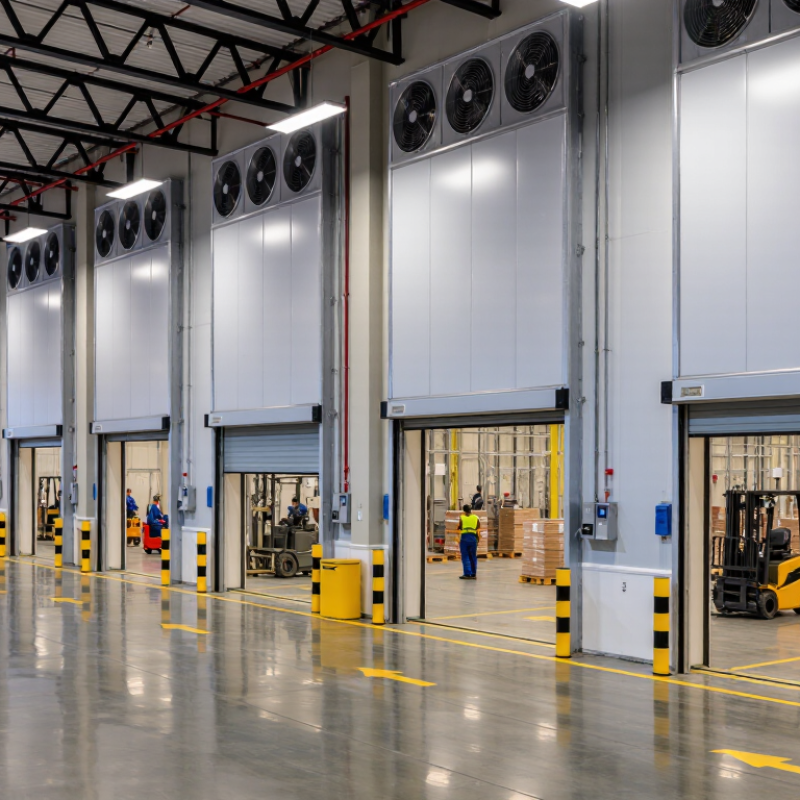
An air door uses a directed stream of air across an open doorway to reduce the exchange of indoor and outdoor air. A fan and shaped outlet create this barrier; they do not form a sealed wall. At a supermarket entrance, the airflow can help limit warm air entering on a humid day. In a loading area, it may reduce drafts and keep some dust or insects from crossing. Results depend on the opening, nearby wind, and installation. The details matter.
Choosing a unit starts with the doorway’s width and height, plus how often it stays open. Air velocity should reach the floor without creating uncomfortable drafts for people passing underneath. Too little airflow weakens the barrier; too much can waste energy and add noise. A practical check is to observe the doorway during normal use, not only in a quiet showroom. Also consider ceiling height, side winds, heating or cooling needs, and access for cleaning. An air door cannot replace a closed door or correct poor building pressure. Sometimes expectations need adjusting. A site assessment helps buyers compare specifications with real operating conditions.
| Air Door Type | Typical Applications | Main Function | Key Selection Considerations | Useful Questions for Global Buyers |
|---|---|---|---|---|
| Unheated air curtain | Retail entrances, offices, and other frequently used doorways in moderate climates | Creates a directed air stream across an opening to help limit air exchange, dust, and flying insects when the entrance is open | Opening width and height, mounting position, airflow direction, noise level, and nearby cross-drafts | Can the unit cover the full opening, and are installation and performance details available for the intended doorway? |
| Heated air curtain | Entrances exposed to cold outdoor air, including commercial and public buildings | Adds heat to the discharged air stream to improve comfort near an open entrance; it does not replace a building’s heating system | Available electrical supply or compatible heating source, heating capacity, control method, and local energy costs | What power supply, heating option, wiring information, and control documentation are supplied? |
| Commercial entrance air curtain | Shops, hotels, restaurants, and building lobbies with regular pedestrian traffic | Helps reduce unwanted air movement while allowing people to pass through without operating a physical door | Doorway dimensions, traffic pattern, mounting clearance, operating controls, and indoor noise requirements | Are mounting drawings, wiring diagrams, operating instructions, and maintenance guidance provided? |
| Industrial air curtain | Warehouses, workshops, loading areas, and production facilities with large or frequently opened doorways | Provides a high-velocity air stream intended for larger openings and demanding operating conditions | Opening size, vehicle and pedestrian traffic, wind exposure, dust levels, duty cycle, and access for servicing | What operating conditions and installation limits are used for the stated airflow performance? |
| Recessed or concealed air curtain | Building entrances where a concealed installation is preferred for architectural reasons | Delivers an air stream from a unit integrated into a ceiling or other suitable building structure | Ceiling space, structural access, return-air path, service access, and coordination with other building systems | Are the unit dimensions, access-panel requirements, and installation details confirmed before construction? |
| Specialized cold-room air curtain | Selected refrigerated areas where doors are opened regularly and temperature control is important | Designed to help manage air exchange at a temperature-controlled opening; suitability depends on the room and installation design | Temperature difference, humidity, condensation and icing risks, opening dimensions, and refrigeration-system requirements | Has the application been reviewed for the actual room temperature, humidity, and door-use pattern? |
| Buyer and supplier evaluation | All air curtain projects involving international sourcing | Helps buyers compare product suitability, documentation, delivery terms, and after-sales support | Applicable electrical requirements, test documentation, materials, warranty terms, spare parts, packaging, and destination-market compliance | Can the supplier provide clear specifications, installation documents, export packaging details, and support arrangements for the destination market? |
Note: An air curtain helps reduce air exchange through an open doorway but does not create a sealed barrier. Actual performance depends on the opening, installation, airflow settings, and surrounding conditions.