Blog

Best Control Components for Optimal Performance in Automation?

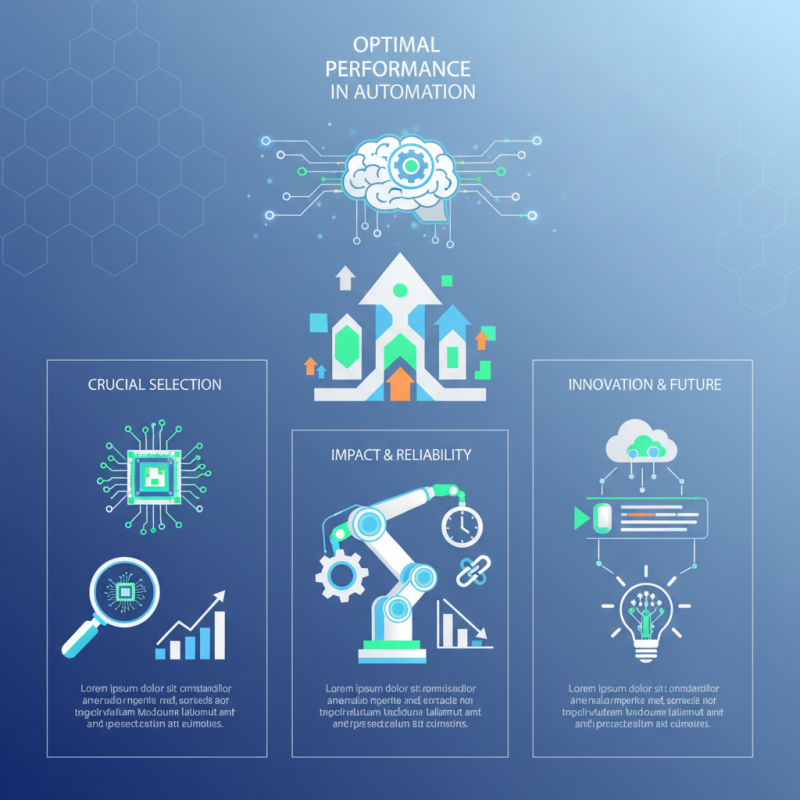
In the fast-evolving world of automation, selecting the right Control Components is crucial for optimal performance. According to a recent industry report by Markets and Markets, the global automation market is expected to reach $296.70 billion by 2026, emphasizing the importance of reliable and efficient control systems. Control Components serve as the backbone of automated processes, directly impacting efficiency, accuracy, and production speed.

Choosing the best Control Components is not just about cost; it’s about performance and reliability. Ineffective components can lead to significant downtime and increased maintenance costs. A study from the International Society of Automation revealed that poor control systems account for up to 30% of operational inefficiencies in industrial settings. This staggering figure highlights the critical need for thoughtful component selection.

Yet, many companies overlook the importance of regular evaluation. The fast-paced nature of technology means that not all components stay relevant. Automation needs evolve rapidly, requiring businesses to adapt. Reflecting on past choices can provide insights into improving future performance. Embracing innovation in Control Components could drastically enhance your automation systems and long-term success.
Best Control Components for Optimal Performance in Automation?

Overview of Control Components in Automation Systems

In automation systems, control components play a vital role. These components ensure that processes operate smoothly and efficiently. They include sensors, actuators, and controllers, each with distinct responsibilities. Sensors gather data from the environment, while actuators execute actions based on this data. Controllers analyze information and make decisions, effectively managing the entire system.

Tip: When selecting control components, consider compatibility. Mismatched components can cause inefficiencies. It’s crucial to test each element in a controlled setting to identify potential issues before full deployment.

Another important aspect is the calibration of control components. Regular calibration ensures accuracy, which is key for system performance. Poor calibration can lead to incorrect data interpretation and subsequent errors in process control. Take time to develop a consistent maintenance schedule.

Tip: Document your calibration processes for better tracking. This will help identify patterns or recurring issues. Understanding where problems arise can guide effective solutions.

Best Control Components for Optimal Performance in Automation?

Component Type Function Key Features Common Applications
Sensors Detect chemical, physical, or environmental changes High sensitivity, fast response time, various types (temperature, pressure, etc.) Manufacturing, HVAC systems, environmental monitoring
Controllers Regulate the operation of a system based on feedback PID control, adaptive control, real-time adjustments Robotics, process control, automotive systems
Actuators Convert electrical signals into physical movement High torque, precision control, various types (electric, hydraulic, pneumatic) Conveyor systems, robotics, valve control
Human-Machine Interface (HMI) Allow users to interact with machines and processes Touch screens, user-friendly layouts, alert systems Industrial automation, control rooms, monitoring stations
Power Supplies Provide electrical power to components Voltage regulation, overload protection, multiple outputs Robotics, automation equipment, control panels

Key Factors Influencing Control Component Performance

Control components play a vital role in automation systems. Their performance can significantly impact overall efficiency. Key factors influencing control component performance include response time, accuracy, and durability. A control component with swift response time enables faster adjustments. In contrast, a lagging component may hinder system performance.

Accuracy is equally critical. An inaccurate control component can lead to errors in operation. These discrepancies may cause delays and increased costs. Durability cannot be overlooked. Components in harsh environments must withstand wear and tear. However, sometimes manufacturers focus too heavily on cost-efficiency instead of reliability.

Moreover, environmental factors play a significant role. Temperature fluctuations and humidity can affect performance. Systems in unpredictable environments may need more robust designs. In many cases, organizations overlook these details. They assume all components will perform uniformly, which is often not the case. This leads to unexpected downtimes and operational challenges. Investing in high-quality components is vital but not always prioritized.

Types of Control Components and Their Functions

Control components play a crucial role in automation systems. They ensure smooth operation and efficiency in various processes. Among the primary types are sensors, actuators, and controllers. Each component has specific roles that contribute to overall performance.

Sensors detect changes in the environment. They convert physical parameters into signals, providing real-time feedback. Actuators take these signals to perform actions, such as moving a valve or adjusting a motor. Controllers process sensor data and send commands to actuators. This combination enables precise control over automated systems.

However, not all components function perfectly all the time. Issues may arise due to improper calibration or external disturbances. Regular maintenance and monitoring are vital for optimal performance. The effectiveness of each component relies on its integration with others. A weak link can disrupt the entire system, leading to inefficiencies and costly downtimes. Recognizing these flaws is essential for continuous improvement in automation.

Best Practices for Selecting Control Components

Selecting the right control components is crucial for optimal performance in automation. Studies show that nearly 70% of automation failures stem from poor component choice. Therefore, organizations must prioritize quality over cost. A slight increase in component reliability could drastically reduce downtime and enhance productivity.

One key aspect is the assessment of compatibility. For instance, different components must work seamlessly together. Misaligned parts can lead to inefficiencies. Research indicates that 55% of engineers find compatibility issues during integration phases. This highlights the importance of thorough testing and validation before finalizing selections.

Furthermore, it's essential to consider the lifecycle of the components. Components that wear out quickly can inflate maintenance costs unexpectedly. A recent survey revealed that 45% of companies face unplanned expenses due to premature component failure. Incorporating lifecycle analysis can help in making informed decisions. Automation is a complex landscape, and careful selection can mitigate many of these common pitfalls.

Future Trends in Automation Control Technologies

The landscape of automation control technologies is shifting rapidly. Industry reports predict a growth rate of 10-15% in automation spending over the next few years. This trend reflects a growing reliance on integrated systems to boost operational efficiency. Key components like sensors and communication devices play a crucial role in this transition.

Artificial intelligence (AI) and machine learning (ML) are gaining momentum in automation. These technologies streamline processes and improve decision-making. According to market analysts, the AI in the automation market is expected to reach $16 billion by 2024. However, challenges remain. Many businesses struggle to implement these advanced systems effectively. There is often a knowledge gap in staff training and technology adoption.

Cybersecurity is also a significant concern as automation grows. Systems that connect with the cloud introduce vulnerabilities. According to a recent report, around 70% of companies face cybersecurity threats in their automated processes. Ensuring secure connections is essential yet often overlooked. Addressing these issues will be crucial for industries aiming to optimize their automated systems.