
Choosing the 2026 best Distribution Circuit Breaker requires more than comparing prices and catalog photographs. Global buyers need dependable protection, verified performance, and clear compliance evidence. The right choice depends on voltage, current, fault levels, installation conditions, and the target market.
A practical evaluation should begin with the breaker’s rated service voltage, continuous current, pole configuration, and short-circuit breaking capacity. Thermal-magnetic and electronic trip units serve different applications. For example, a factory feeder may need adjustable protection for motor starting currents. A commercial panel may prioritize compact dimensions and simple maintenance. IEC 60947-2 and UL 489 are important references, but acceptance requirements can differ by country. Always confirm the applicable local standard.
Details matter.
During supplier reviews, buyers should request test reports, certification records, production traceability, and a clear warranty policy. Check terminal temperature rise, enclosure compatibility, mechanical endurance, and replacement-part availability. A reliable manufacturer should explain its testing process without hiding behind vague claims. Sample inspection is also valuable. A breaker that feels loose, shows uneven labeling, or lacks consistent torque markings deserves closer attention.
No shortlist is perfect. A spreadsheet can miss installation problems, especially in hot, humid, or dusty environments. I would also avoid selecting the lowest-priced unit before checking long-term support. Some specifications look impressive but provide little field evidence. The strongest purchasing decision combines laboratory data, installer feedback, and realistic operating conditions. This guide will compare leading options for 2026 and help buyers identify a Distribution Circuit Breaker that balances safety, durability, compliance, and total ownership cost.
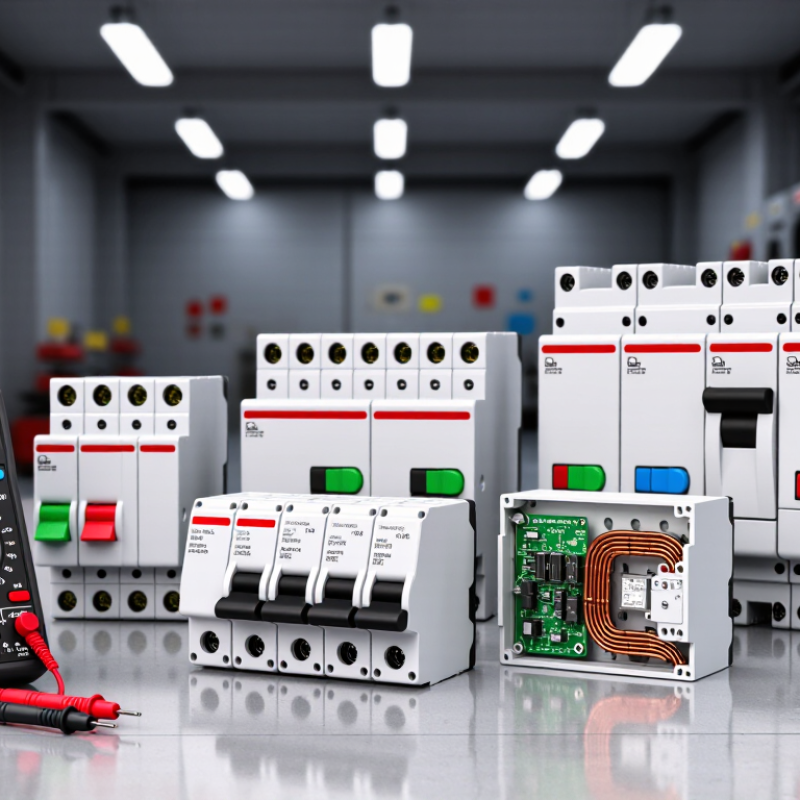
A distribution circuit breaker protects electrical networks from overloads and short circuits. It sits inside a distribution board, where electricity branches toward lighting, motors, sockets, and control equipment. The International Energy Agency’s Electricity 2024 report expects global electricity demand to grow by about 4% annually through 2026. That growth increases pressure on protection systems.
Its operation is simple in principle. A thermal element responds to sustained overloads. A magnetic element reacts almost instantly to severe short-circuit current. Some modern units use electronic trip sensors for adjustable protection and better monitoring. When a fault appears, the contacts separate and an arc forms. The breaker extinguishes that arc inside its chamber, limiting damage to cables and equipment. IEC 60947-2 defines key requirements for low-voltage circuit breakers, including performance and testing.
Tips:
Match the breaker rating with the cable’s ampacity. Check interrupting capacity at the installation point. Confirm voltage, poles, trip curve, and ambient temperature. Selectivity also matters; the nearest breaker should trip first. In real panels, poor tightening can create heat even when the breaker is correctly rated. That detail is easy to miss. Another imperfect decision is choosing the highest current rating “for safety.” It may prevent nuisance trips, but it can leave the cable poorly protected. The best selection uses measured load data, fault calculations, and documented maintenance records.
Source: International Energy Agency, Electricity 2024; IEC 60947-2.
Selecting a circuit breaker starts with the distribution system, not the product catalogue. In small residential panels, miniature circuit breakers suit lighting, sockets, and modest appliance circuits. Their compact design supports neat layouts and quick replacement. I have found that incorrect curve selection can cause nuisance tripping during motor starts. That detail is easy to overlook.
Molded-case circuit breakers fit commercial feeders, workshops, and larger branch circuits. They offer higher current ratings and stronger interruption capacity than most miniature units. Adjustable protection settings can improve coordination between upstream and downstream devices. For main low-voltage switchboards, air circuit breakers provide robust control and maintenance access. They need more space, careful installation, and trained inspection.
Residual-current protection matters where electric shock or leakage risks exist. An RCBO combines overcurrent and residual-current protection in one device. An RCD adds leakage protection but may require separate overcurrent protection. These devices suit wet-area circuits, outdoor equipment, and sensitive facilities. They are not a cure for poor wiring.
Buyers should compare rated voltage, breaking capacity, frequency, pole count, trip curve, and operating temperature. Local certification requirements also deserve verification before shipment. Short-circuit calculations should guide the final choice. Sometimes, the cheaper breaker creates greater maintenance cost later. I still see projects specify current ratings without checking available fault current. That is a preventable mistake.
The 2026 best distribution circuit breaker is not simply the device with the highest current rating. Global buyers should match voltage, load profile, fault level, and installation environment. The IEA’s Electricity 2024 report forecasts global electricity demand growth of 3.4% annually through 2026. That growth increases pressure on low-voltage distribution systems. Select breakers tested to IEC 60947-2 or the relevant national equivalent. Verify rated short-circuit capacity, service breaking capacity, and temperature derating. A compact enclosure can run hot.
Safety evidence matters more than catalogue claims. Request type-test reports, routine-test records, and clear traceability for production batches. Check insulation resistance, dielectric strength, mechanical endurance, and trip accuracy. For household or light commercial applications, IEC 60898-1 may apply; industrial systems often require IEC 60947-2. In North American projects, UL 489 or CSA C22.2 No. 5 may be specified. Requirements differ by market.
Performance should remain stable after repeated switching and under realistic ambient temperatures. The IEA’s Electricity 2024 analysis also highlights rising peak-demand challenges, making dependable overload protection increasingly important. Ask for test conditions, not only headline values. Field experience shows that poor terminal torque can defeat a well-designed breaker. No checklist is perfect. Buyers should recheck coordination studies, cable sizes, enclosure ventilation, and local certification before approval. A missing document can delay customs, commissioning, or insurance acceptance.
How to Evaluate Safety, Performance, and Compliance Standards
The chart compares the maximum voltage levels commonly addressed by major low-voltage circuit-breaker standards. IEC 60947-2 covers industrial circuit breakers up to 1,000 V AC and 1,500 V DC, IEC 60898-1 covers household and similar circuit breakers up to 440 V AC, and UL 489 covers molded-case circuit breakers up to 600 V AC. Buyers should also verify interrupting capacity, trip characteristics, temperature-rise performance, insulation coordination, installation environment, and the certification requirements of the destination market.
Reference framework: IEC 60947-2, IEC 60898-1, and UL 489. Voltage limits shown are standard scope values, not a specific product rating or certification result.
For global buyers, the best distribution circuit breaker is not simply the highest-rated model. It must match local voltage, frequency, fault level, and installation conditions. IEC 60947-2 compliance provides a useful technical baseline. Buyers should also verify tested interrupting capacity, short-circuit performance, insulation strength, and mechanical endurance.
Temperature derating matters.
A breaker rated at 40°C may perform differently inside a hot enclosure. Request derating curves, terminal temperature data, and clear test certificates. The International Energy Agency’s Electricity 2025 report forecasts global electricity demand to grow by about 4% annually through 2027. That growth increases pressure on reliable protection across factories, buildings, and infrastructure. Digital trip units, event records, and remote status signals can reduce diagnostic time, especially where service teams are far away. However, digital features are not automatically better. They need stable communication, secure configuration, and trained technicians.
Supply reliability deserves equal attention. The World Bank’s 2023 Logistics Performance Index covered 139 economies and highlighted tracking, timeliness, and shipment reliability as core logistics measures. Global buyers should therefore examine spare-part availability, packaging quality, lead times, and documented change control. A clear accessory system helps, too. Auxiliary contacts, undervoltage releases, and shunt trips should remain compatible across ratings. Some tenders focus too heavily on purchase price. That is a weakness. Five years of replacement delays can cost more than the original breaker. Specifications should be reviewed by both an electrical engineer and an experienced maintenance technician. Even then, site conditions may expose assumptions we missed.
Choosing the best distribution circuit breaker in 2026 requires more than comparing prices. Global buyers should review supplier experience, production records, test documents, and after-sales support. A dependable supplier can explain interrupting capacity, voltage range, pole configuration, and temperature limits in clear technical language.
Compare the total cost, not only the unit quotation. Freight, customs handling, spare units, installation labor, and training can change the final budget. Ask for a sample datasheet and a traceable test report. Verify whether the breaker matches local electrical codes and the project’s short-circuit level. A cheap option may become expensive after delays.
Installation quality matters greatly. Qualified electricians should confirm cable sizing, terminal torque, phase identification, and enclosure clearances. A loose connection can create heat behind a closed panel. That detail is easy to miss. Maintenance teams should schedule visual inspections, torque checks, trip testing, and thermal scanning based on load and site conditions. Dust, humidity, vibration, and frequent switching may require shorter intervals.
Supplier communication deserves practical testing. Send a technical question before ordering and measure the response quality. Does the answer include limits, drawings, and corrective steps? If replies remain vague, future warranty work may become difficult. I would not rely on a polished catalog alone; real procurement decisions sometimes expose gaps that documents hide. Keep one approved spare for critical circuits, although this adds storage cost and can be excessive for small installations.
Practical comparison of common low-voltage distribution circuit-breaker categories for international purchasing decisions
| Breaker Category | Typical Rated Current | Typical Voltage | Typical Short-Circuit Rating | Best-Fit Applications | Applicable Product Standards | Indicative 2026 Unit Cost | Typical Installation Effort | Maintenance Requirement | Expected Service Life | Key Buying Checks |
|---|---|---|---|---|---|---|---|---|---|---|
| Miniature Circuit Breaker (MCB) | 1–63 A | 230/400 V AC; 120/240 V AC options | 4.5–10 kA commonly available | Lighting circuits, socket outlets, small commercial loads, residential final circuits | IEC 60898-1; regional equivalents may apply | US$2–15 per pole, depending on configuration and certification | Low DIN-rail mounting; normally 10–20 minutes per device when wiring is prepared | Visual inspection, terminal retightening during scheduled panel checks, and functional testing; generally no internal servicing | Approximately 15–25 years under normal conditions | Poles, trip curve, rated breaking capacity, terminal size, ambient-temperature derating, and local certification |
| Molded-Case Circuit Breaker (MCCB) | 16–1,600 A | 240–690 V AC; DC versions require dedicated ratings | 18–100 kA, depending on frame and voltage | Industrial feeders, motor protection, commercial buildings, generators, and photovoltaic distribution | IEC 60947-2; UL 489 for applicable North American installations | US$80–2,500 per device; electronic trip units and accessories increase cost | Medium Panel or busbar mounting; typically 30–120 minutes excluding cable preparation | Annual visual and mechanical inspection; trip testing commonly every 1–3 years, based on risk and duty cycle | Approximately 15–25 years or the manufacturer’s specified operating-cycle limit | Interrupting rating at the actual voltage, adjustable trip settings, coordination study, lug compatibility, accessories, and spare parts |
| Air Circuit Breaker (ACB) | 630–6,300 A | 400–690 V AC commonly used in low-voltage switchboards | 42–150 kA, depending on configuration | Main incomers, bus couplers, large generators, data centers, hospitals, and high-current switchboards | IEC 60947-2; IEC 61439 applies to the complete low-voltage assembly | US$1,500–15,000 per device; draw-out construction and protection accessories add cost | High Switchboard integration, primary connections, control wiring, testing, and commissioning are required | Periodic cleaning, lubrication where specified, contact-wear inspection, secondary-injection testing, and mechanism checks; often annually or according to duty | Approximately 15–25 years with proper servicing and within rated operations | Fixed or draw-out type, short-time withstand rating, selectivity, arc-flash settings, communication protocol, service support, and test documentation |
| Residual-Current Circuit Breaker with Overcurrent Protection (RCBO) | 6–63 A | 230/400 V AC commonly used | 6–10 kA commonly available | Final circuits requiring both overload protection and residual-current protection, especially wet or public areas | IEC 61009-1; local installation rules determine where it is required | US$18–80 per pole or module, depending on residual-current type and sensitivity | Low to Medium DIN-rail installation with neutral routing and leakage-protection testing | Test-button operation at regular intervals; inspect nuisance tripping, insulation condition, and terminal tightness | Approximately 10–20 years, depending on environment and test frequency | Type AC, A, F, or B; 30 mA personnel protection where required; neutral arrangement, pole count, and selectivity |
| Residual-Current Device (RCD/RCCB) Without Overcurrent Protection | 25–125 A commonly available | 230/400 V AC commonly used | Must be coordinated with an upstream overcurrent device | Earth-leakage protection for groups of circuits, residential distribution boards, and commercial installations | IEC 61008-1; local electrical codes may specify application limits | US$15–100 per device, excluding the required upstream circuit breaker | Low DIN-rail mounting; additional neutral connections and testing are required | Regular test-button operation, leakage investigation, and inspection of upstream overcurrent coordination | Approximately 10–20 years under normal service conditions | Residual-current type, rated residual operating current, short-circuit coordination, number of poles, and immunity to transient leakage |
| DC Molded-Case Circuit Breaker | 16–1,600 A | Up to 1,500 V DC, depending on design | Application-specific; DC interruption is not equivalent to AC interruption | Battery energy storage, solar photovoltaic systems, telecom power, and industrial DC distribution | IEC 60947-2; photovoltaic and battery-system standards may also apply to the complete installation | US$100–4,000 per device, depending on voltage, polarity, interruption rating, and accessories | Medium Polarity, creepage, clearance, cable routing, and isolation requirements must be verified | Thermal inspection, connection checks, trip testing, and review of battery or PV operating conditions | Approximately 10–20 years, subject to fault-current exposure and operating cycles | DC voltage per pole, polarity, interruption rating, reverse-current capability, isolation function, temperature derating, and system coordination |