2026 Best Plastic Gear Manufacturers for Global Buyers
Choosing a Plastic Gear manufacturer is not just a price exercise. Buyers must weigh material consistency, tooth accuracy, noise, wear, and production capacity. Small parts matter. A gear hidden inside a medical device, printer, or vehicle actuator can determine whether the whole assembly runs smoothly.
The scale of plastics manufacturing offers useful context, but it is not a direct measure of gear demand. Plastics Europe’s Plastics – the Fast Facts 2024 reports that global plastics production reached 413.8 million tonnes in 2023. That figure points to a vast materials ecosystem, not proof that every supplier can produce precision gears. Buyers still need evidence: material grades, dimensional inspection methods, tooling capabilities, and repeatable sample results.
This 2026 guide helps global buyers compare manufacturers using practical criteria, including engineering support, customization, quality systems, lead times, and export experience. It also considers common gear materials such as POM, nylon, and PEEK, whose performance varies with load, temperature, moisture, and lubrication. A polished catalog can be persuasive. It cannot replace a tested prototype or clear inspection records. No shortlist is perfect, either; supplier capabilities change, and published claims may not reveal production limits. Treat each profile as a starting point, then verify details against your application and request current documentation before making a sourcing decision.
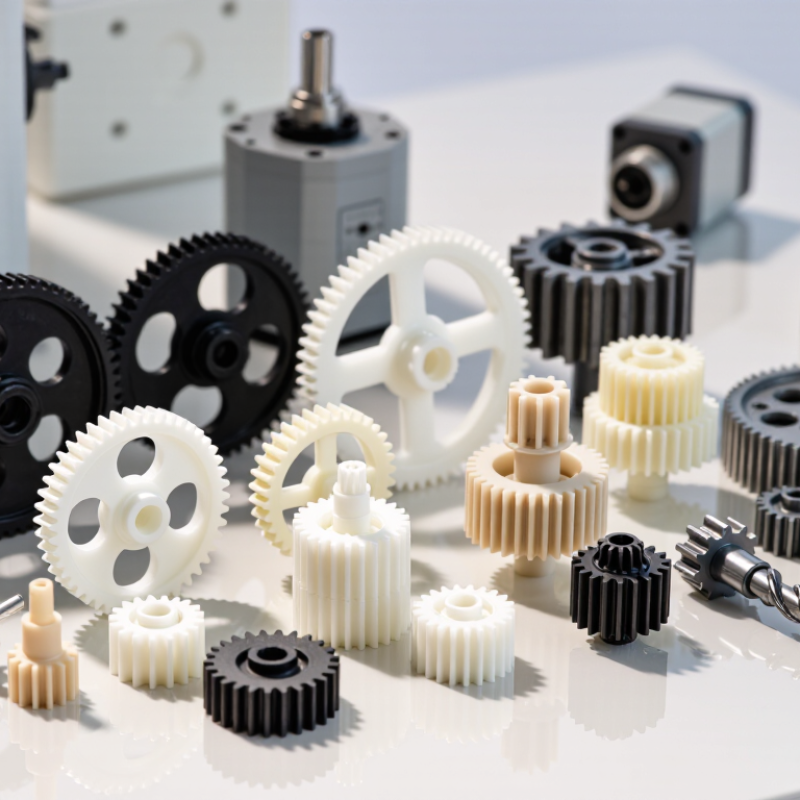
Understanding Plastic Gears and Their Global Applications
Plastic gears convert motor rotation into controlled movement in appliances, pumps, medical instruments, office equipment, and automotive systems. Their low weight and quiet operation suit compact assemblies. They can also resist corrosion and reduce the need for lubrication, depending on the polymer and operating conditions. Small details matter. Tooth geometry, moisture, temperature, and continuous load all affect performance.
Material supply provides useful context, but it does not predict gear quality. PlasticsEurope’s Plastics—the Fast Facts 2023 reports 400.3 million tonnes of global plastics production in 2022, with Asia accounting for 55 percent. The OECD’s Global Plastics Outlook reports 460 million tonnes in 2019. These figures use different years and reporting scopes; neither measures engineering-grade gear resins or finished gears. Buyers should check material specifications, test conditions, and traceability rather than infer suitability from broad production totals.
In a real assembly, a small pump gear may run quietly at first, then deform under heat or sustained torque. Polymer gears can creep. That risk deserves attention. Ask manufacturers for load-life and temperature testing that reflects the intended duty cycle, plus dimensional inspection data for critical teeth. One limitation: test results from a single resin or setup may not transfer to another design. Global buyers should compare evidence against their actual operating conditions, not rely on a generic claim of durability.
How Plastic Gear Manufacturers Design and Produce Components
Design begins with the gear’s job: transmitted torque, speed, noise limits, operating temperature, and expected service life. Engineers use these requirements to choose a suitable polymer, such as acetal or reinforced nylon. Material choice affects strength, friction, moisture response, and dimensional stability. Small details matter. Tooth shape, hub thickness, and shaft fit can change how smoothly a gear runs.
Designers typically model the part in CAD and check tooth engagement, clearances, and likely stress points. Prototypes help reveal issues that simulations may miss, including unwanted noise or excess wear. A neat CAD model can still produce a poor-running gear. That takes testing. Manufacturers may adjust the geometry or material before committing to production tooling.
For higher volumes, injection molding can create consistent parts, but mold design and process control are critical. Cooling, shrinkage, and gate placement can affect tooth accuracy. Smaller runs may use machining, though it can cost more per component. During production, teams inspect dimensions, tooth profiles, and fit against defined tolerances. Buyers can ask for material data, inspection records, and sample parts. These details make it easier to judge whether a supplier’s process suits the application, not just the drawing. Some trade-offs remain; a quieter gear may require changes to cost, strength, or service life.
2026 Best Plastic Gear Manufacturers for Global Buyers — How Plastic Gear Manufacturers Design and Produce Components
This chart compares typical density values for unfilled engineering plastics that may be considered in gear design. Actual properties vary by grade, additives, and supplier; material selection also depends on load, wear, temperature, moisture, and operating conditions.
Key Criteria for Evaluating Manufacturers in 2026
For global buyers in 2026, evaluate plastic gear manufacturers against the conditions your parts will actually face. Specify torque, speed, temperature, noise limits, and expected service life before comparing quotations. A gear that runs quietly on a bench may behave differently inside a warm, enclosed assembly.
Test it under load.
Ask which polymers and additives suit your application, and request technical data for the proposed grade. Review dimensional tolerances, tooth-profile inspection methods, and how changes in tooling are controlled. A capable manufacturer should explain how it manages shrinkage and warpage, not simply promise “high precision.” Request sample inspection records and clear acceptance criteria.
Production consistency deserves as much attention as a strong prototype. Ask how process settings are monitored between shifts, how nonconforming parts are recorded, and whether batch traceability is available. Check capacity against your forecast, including seasonal peaks and replacement orders. A polished sample can still hide variation across a production run.
This is easy to overlook. Compare total delivered cost, communication speed, and engineering support—not just the unit price. No checklist catches everything, so leave room for pilot runs and a second review after real-world testing.
Leading Plastic Gear Manufacturers for Global Buyers
Leading plastic gear manufacturers for global buyers do more than offer a catalog of standard parts. They help match tooth geometry, material, and operating conditions to the actual application. A gear running inside a small pump may face moisture, heat, and repeated load cycles. Ask suppliers how they verify dimensions, inspect molded parts, and manage production changes. Clear answers matter. So do sample gears you can measure and test before approving a larger order.
Tips: Share a drawing, expected torque, speed, temperature range, and annual volume. Ask for material data and inspection records. Check whether the supplier can explain tolerances in plain language. A fast quote is useful, but it is not proof of a reliable process.
For international sourcing, confirm lead times, packaging, and communication routines before production starts. Request a sample made with the intended material and process, not merely a close substitute. Compare noise, wear, and fit in the real assembly. A neat datasheet can still leave questions about long-term performance. I would not treat one successful test as a guarantee; operating conditions can change, and plastic gears may need redesign after trial use. Reliable manufacturers are candid about those limits and document what they can verify.
How to Select and Source an International Supplier
Selecting an international plastic gear supplier starts with the duty cycle, not the catalogue. Share the gear drawing, load, speed, noise limit, operating temperature, and expected service life. Specify the resin grade and reinforcement, too. Moisture and temperature can change dimensions, so request test results under conditions close to actual use. A polished sample is not proof of stable production.
Check how the supplier controls tooling, material batches, tooth dimensions, and final inspection. Ask for measurement records, traceability, sample approval, and a written process for handling defects. The World Bank’s 2023 Logistics Performance Index compares 139 economies across customs, infrastructure, shipment arrangements, tracking, and delivery timeliness. Use those indicators alongside the supplier’s own lead-time and shipping records. Small details matter.
International delivery deserves equal scrutiny. UNCTAD’s Review of Maritime Transport 2024 reports that shipping carries over 80% of global trade by volume, making transit planning essential. Confirm packaging protects teeth from impact, and agree on shipment terms, insurance, spare quantities, and escalation contacts. One sourcing weakness is relying on a single successful sample. Pilot orders can reveal variation, though they add time and cost. Neither option is perfect.