
Blog

7 Tips for Buying Marine Flex Hose for Your Vessel

Choosing Marine Flex Hose is not a cosmetic decision. A hose may look sound on a calm dock, then face engine heat, vibration, salt spray, and tight bends at sea. The right choice depends on its job, the fluids it carries, operating temperature, pressure, and installation space. A mismatch can lead to leaks, premature wear, or a difficult repair far from shore.

Marine systems specialist Alex Morgan puts the buying principle this way: “Match the hose to the service, not just the fitting.” That is the point of these seven tips. They cover hose construction, inner diameter, pressure and temperature ratings, bend radius, fitting compatibility, installation, and inspection. Check the manufacturer’s specifications, and compare them with your vessel’s actual conditions. A label alone cannot tell you whether a hose will clear a hot engine part or tolerate repeated movement.

Details matter. Measure the route before ordering. Look for chafe points near clamps, bulkheads, and vibrating equipment. Confirm that the hose is intended for its specific marine application; fuel, exhaust, sanitation, and coolant lines do not share identical requirements. Ask the supplier when ratings or compatibility are unclear. A quick admission: even careful buyers can overlook the bend behind a panel. Review the installed run, too. It may reveal a problem the catalog never could. These tips offer a practical starting point, not a substitute for product documentation or qualified advice.
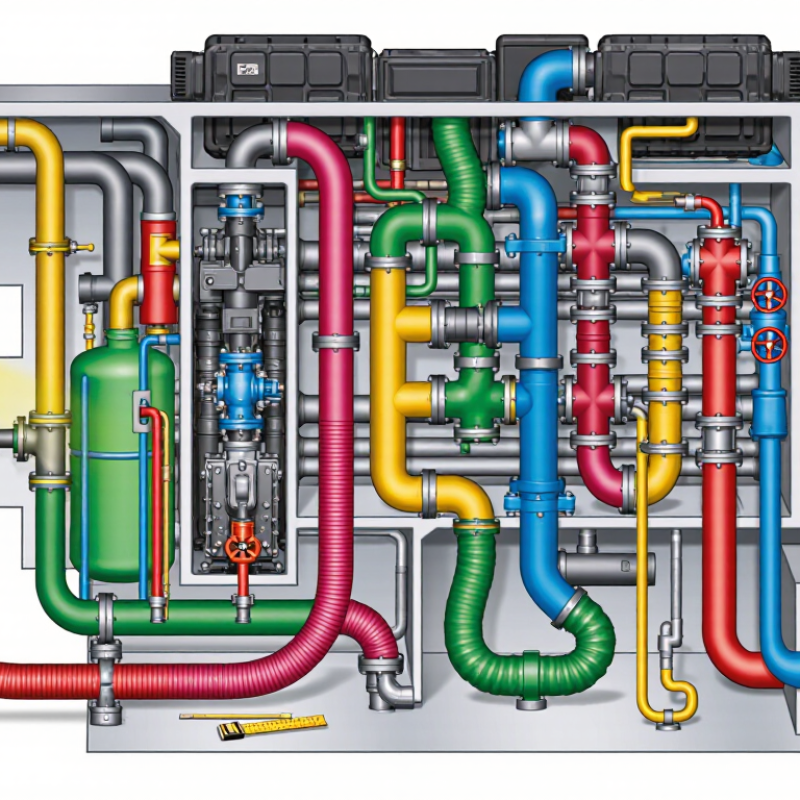
7 Tips for Buying Marine Flex Hose for Your Vessel

Define the Hose’s Application and the Fluids It Must Carry

Before comparing marine flex hose, define exactly where it will be installed. A short fuel line near an engine faces different demands from a cockpit drain hose. Note whether the hose will carry fuel, seawater, coolant, exhaust gases, or drinking water. Similar-looking hoses are not interchangeable. The wrong inner lining can soften, swell, or contaminate the fluid.

Write down the fluid’s temperature, pressure, and flow conditions. Include brief heat spikes after shutdown, not just normal running temperatures. For a bilge pump, check whether the line must handle suction as well as discharge. For exhaust service, confirm the hose is designed for wet exhaust and the expected heat. Check the product data for fluid compatibility, pressure limits, bend radius, and installation requirements. A label may not tell the whole story.

Also consider the route aboard your vessel. Measure the length, bends, and space around clamps before ordering. A hose that kinks behind a bulkhead can restrict flow, even when its rating looks suitable. I would verify the details against the hose maker’s technical information and ask a qualified marine technician when the application is unclear. It is easy to assume “marine grade” covers every use. It does not.

Check Material Compatibility and Marine Standards

Marine hose selection starts with the fluid, temperature, and location—not the outside diameter alone. A hose carrying gasoline needs a liner rated for that fuel and its additives; a bilge hose may need different resistance to oil and standing water.

For fuel lines on small craft, check whether the application calls for ISO 7840 or ISO 8469. Marine exhaust installations may require hose meeting SAE J2006.

These standards address different service conditions, so a “marine” label alone is not enough. Fit matters.

Read the hose markings and manufacturer’s technical sheet, then compare them with the vessel’s manual and the actual routing. A tight bend behind an engine can flatten a hose; a hot exhaust run can exceed its temperature rating. Salt spray also attacks exposed reinforcement and fittings over time.

The U.S. Coast Guard’s 2023 Recreational Boating Statistics recorded 3,844 reported boating incidents, but the report does not attribute those incidents to hose failures. It is still a useful reminder to inspect critical systems.

Look for cracking, soft spots, chafe, fuel odor, and loose clamps. I would not assume an older hose remains compatible just because it looks clean; that judgment deserves a second look.

Match Hose Size, Pressure, Temperature, and Vacuum Ratings

Tip 1: Measure the fitting, not just the old hose. Check its inside diameter and the fitting’s outside diameter, then confirm the hose is approved for the job: fuel, cooling water, or wet exhaust. ISO 7840 and ISO 8469 cover different marine fuel-hose requirements; a hose that looks right may still be unsuitable. A neat fit is not proof.

Tip 2: Compare working pressure, vacuum, and temperature ratings with actual operating conditions. Include pump pressure, suction-side vacuum, engine-bay heat, and the fluid temperature. Do not treat burst pressure as a safe working limit. On a suction line, a hose can flatten inward even when it never leaks. Check the maker’s technical sheet, and leave a little room for uncertainty when readings are incomplete.

Tip 3: Inspect the whole route before ordering. Look for tight bends, chafe points, and clamps that sit behind the fitting’s raised bead. The U.S. Coast Guard’s 2023 Recreational Boating Statistics report recorded 564 boating deaths; it does not attribute them to hose failures, but it underscores why sound installations matter. Recheck the route after tightening. I might miss a rub point on the first pass.

7 Tips for Buying Marine Flex Hose for Your Vessel - Match Hose Size, Pressure, Temperature, and Vacuum Ratings

Practical selection checks for marine hose. Confirm the final choice against the hose manufacturer’s specifications and the vessel system requirements.
Tip What to Check Useful Data or Example Why It Matters
1. Identify the service Determine what will flow through the hose and where it will be installed: fuel, potable water, cooling water, bilge water, sanitation, or wet exhaust. A hose suitable for water service is not automatically suitable for fuel, sanitation, or hot exhaust. Check the product’s stated application and applicable marine hose standard; examples include ISO 7840 for small-craft fuel hoses and SAE J2006 for marine wet-exhaust hose. Hose liners, reinforcement, and covers are designed for particular fluids, temperatures, and installation conditions.
2. Match the inside diameter Measure the hose-barb or connection’s nominal size and confirm whether the fitting size refers to the hose’s inside diameter. Check the space available for bends and clamps. Common nominal inside diameters include 1/2 in (12.7 mm), 3/4 in (19.1 mm), 1 in (25.4 mm), and 1 1/2 in (38.1 mm). These are size examples, not a recommendation for a specific system. An undersized hose can restrict flow; a poorly matched hose and fitting can make a secure connection difficult.
3. Check pressure ratings Compare the hose’s rated working pressure with the system’s maximum operating pressure, including relevant pump or operating conditions. Check whether the rating changes with temperature. Use the manufacturer’s working-pressure rating, not its burst-pressure figure, as the service limit. For unit conversion, 1 bar is approximately 14.5 psi. Pressure ratings are product- and temperature-specific. A burst rating is not an allowable continuous operating pressure.
4. Match the temperature range Consider both the fluid temperature and the temperature around the hose, including engine spaces, exhaust routing, and seasonal conditions. Check the published minimum and maximum service temperatures for the exact hose and application. Do not assume that two hoses with the same diameter have the same temperature capability. Heat or cold outside the specified range can reduce hose performance and service life.
5. Verify vacuum resistance If the hose is on a suction line or may experience negative pressure, look for a stated vacuum or suction rating at the relevant temperature and bend radius. A pressure rating alone does not establish vacuum suitability. Use a hose specifically rated for the system’s expected vacuum conditions. A hose without adequate reinforcement may flatten or collapse under suction, restricting flow.
6. Check routing and bend radius Plan the route before ordering. Check the specified minimum bend radius, hose length, movement, chafe points, and clearance from hot or moving components. Measure the installed route with allowance for the fitting engagement and movement required; do not force a bend tighter than the hose’s published minimum radius. Kinks, tension, abrasion, and tight bends can damage the hose or limit flow.
7. Match fittings and inspect compatibility Confirm fitting type, barb size, clamp compatibility, hose wall thickness, and resistance to the fluid and surrounding environment. Use marine-suitable fittings and clamps appropriate to the hose and location. Follow the hose and fitting instructions for insertion depth, clamp position, and installation. A correctly rated hose can still leak or fail if the connection is incompatible, incorrectly assembled, or exposed to corrosion or chafing.

Selection note: Ratings and dimensions vary by hose construction and manufacturer. Verify the exact product documentation, system requirements, and applicable vessel regulations before installation.

Assess Reinforcement, Bend Radius, and Installation Requirements

Tip 1 — Check reinforcement against the hose’s job. A suction line may need a wire helix to resist collapse, while a pressure line needs reinforcement rated for its working pressure. Compare the hose markings with the system’s pressure, temperature, and fluid requirements. Leave a safety margin. More layers do not automatically mean a better fit.

Tip 2 — Respect the minimum bend radius. Measure the curve along the hose’s inside edge, and compare it with the supplier’s specification. A tight turn behind a pump can flatten the hose or strain its reinforcement. Give it room. I’ve seen neat-looking routes become troublesome once an engine moves on its mounts; static clearance can be misleading.

Tip 3 — Plan the installation before cutting. Check fitting size, access for clamps, and the full route from end to end. Keep the hose clear of sharp edges and hot surfaces, and support long runs to limit vibration and chafe. Avoid twisting it during fitting. After installation, inspect the connections and confirm there are no kinks or leaks under operating conditions. If specifications are unclear, verify them with the hose supplier or vessel documentation.

Compare Supplier Quality, Documentation, and Support

Buying marine flex hose is not just a price comparison. Match the hose’s stated fluid, temperature, working pressure, suction duty, and bend radius to the vessel’s actual service. For small-craft fuel lines, check whether the product is tested to ISO 7840 or ISO 8469. These standards address fire-resistant and non-fire-resistant fuel hoses, respectively. Neither standard proves suitability for every hose application.

Compare suppliers by requesting a current datasheet, relevant test evidence, batch traceability, and clear hose markings. Check pressure limits and temperature ranges against engine-room conditions, not a generic catalog table. The U.S. Coast Guard’s 2023 Recreational Boating Statistics report recorded 3,844 recreational boating accidents, 564 deaths, and 2,126 injuries. The report does not attribute these figures to hose failures, but it shows why careful equipment selection and maintenance records matter. Ask for proof.

Support matters after delivery. Can the supplier confirm fitting compatibility, minimum bend radius, clamp recommendations, and inspection guidance in writing? Ask how they handle questions when a hose route is tighter than the drawing suggests. A prompt technical reply can help prevent improvised installation, though it cannot replace a qualified installer. Keep certificates and purchase details with vessel maintenance records. I would not choose based only on a polished datasheet; test scope and batch traceability deserve a closer look.