
Blog

China Top 10 Heavy Cargo Drone Manufacturers?

Heavy Cargo Drone technology is moving from controlled demonstrations toward practical logistics. China is central to this shift, with manufacturers developing aircraft that can lift hundreds of kilograms, fly beyond difficult terrain, and support remote industrial work.

The market still lacks a single, reliable category for heavy cargo platforms. That weakness matters. Drone Industry Insights reports continued growth in commercial drone services, while Grand View Research forecasts strong expansion across the broader cargo drone market. These reports show momentum, but they do not always separate heavy-lift aircraft from smaller delivery drones. Comparisons can therefore become misleading.

Former FAA Administrator Michael Huerta offered a useful warning: “Drones are not toys.” His statement remains highly relevant to Heavy Cargo Drone evaluation. Payload capacity alone proves little. Battery endurance, redundancy, weather tolerance, ground handling, maintenance access, and certification readiness matter just as much.

A 200-kilogram payload sounds impressive. Yet a mountain landing site, strong crosswinds, or a delayed battery can change the calculation quickly. This introduction examines China’s leading manufacturers through those practical conditions. It considers product maturity, tested payload claims, flight-control systems, manufacturing depth, and documented commercial experience.

The ranking is not absolute. Public information differs between companies, and marketing language can exceed independently verified evidence. That imperfection deserves attention. Buyers should inspect test records, service networks, training requirements, and total operating costs before selecting a supplier. The strongest manufacturer may not offer the largest drone. It may offer the most dependable operation on an ordinary, difficult day.
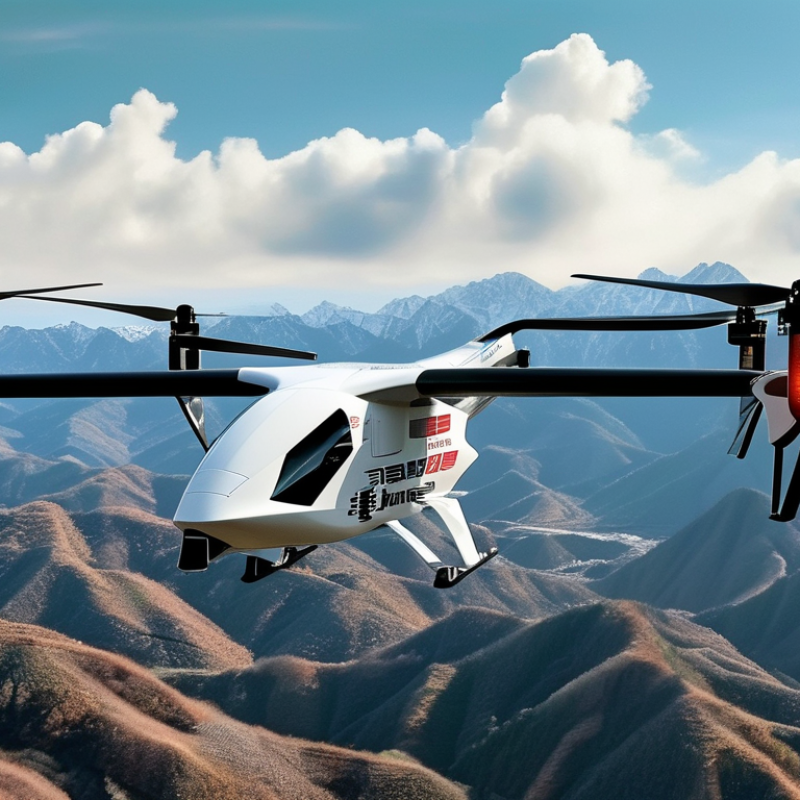
China Top 10 Heavy Cargo Drone Manufacturers?

What Defines a Heavy Cargo Drone Manufacturer in China?

A heavy cargo drone manufacturer in China is defined by more than a large airframe or impressive payload claims. It must combine aircraft design, propulsion engineering, flight-control software, and disciplined production. Engineers should explain payload limits clearly, including battery weight, wind conditions, altitude, and route distance. Real performance changes with weather.

Practical experience matters. A credible manufacturer tests full-load takeoffs, repeated landings, emergency power responses, and cargo restraint systems. Test records should include flight hours, maintenance findings, and controlled failure reviews. Operators also need clear manuals, pilot training, spare parts, and responsive technical support. A drone that flies well once is not enough.

Safety evidence separates serious manufacturers from ordinary assemblers. Buyers should examine quality-control procedures, component traceability, inspection records, and applicable civil aviation approvals. Manufacturing facilities should show repeatable assembly, not only polished demonstrations. Factory visits can reveal useful details, such as torque checks, battery storage conditions, and propeller balancing.

No factory gets every design decision right. Some payload figures may look attractive but hide difficult operating conditions. Honest suppliers admit those limits and update their designs after field feedback. They measure service intervals, battery degradation, vibration, and software faults over time. That evidence helps buyers compare China’s heavy cargo drone manufacturers with greater confidence, especially when a delivery route crosses farms, construction sites, or mountainous terrain.

China Heavy Cargo Drone Manufacturers: What Defines a Heavy Cargo Drone?

In China, civil unmanned aircraft are classified by maximum takeoff weight. A heavy cargo drone manufacturer typically targets the large-aircraft category, defined by a maximum takeoff weight above 150 kg, while also developing payload systems, flight-control safety, logistics integration, and regulatory compliance.

Data basis: weight-category thresholds under China’s Interim Regulations on Unmanned Aircraft Flight Management. The 150 kg value represents the lower boundary of the large unmanned aircraft category; actual cargo payload is lower than maximum takeoff weight.

Key Criteria for Ranking China’s Heavy Cargo Drone Companies

China Top 10 Heavy Cargo Drone Manufacturers?
Key Criteria for Ranking China’s Heavy Cargo Drone Companies

Ranking heavy cargo drone manufacturers requires more than comparing advertised payloads. A reliable review examines verified flight records, payload stability, range, battery endurance, and weather performance. Test data should show how the aircraft behaves with heavy containers, uneven weight, and changing wind. Safety also matters. Look for redundant motors, protected control links, emergency landing systems, and clear maintenance procedures. A polished demonstration is useful, but it is not enough.

Manufacturing capability deserves close attention. Evaluate production consistency, component traceability, quality inspections, and after-sales support. Experienced operators can reveal practical weaknesses, such as difficult battery replacement or slow access to spare parts. Compliance with relevant aviation requirements should be confirmed for each intended market. Cost should include training, charging equipment, software, insurance, and downtime. The cheapest aircraft may become expensive quickly. Some ranking methods still rely too heavily on brochure figures. That needs reconsideration.

Tips: Ask for independent test records, not only laboratory claims. Request a live payload demonstration in realistic wind. Check flight logs, service response times, and training materials. Speak with current users when possible. Also, compare useful payload, not maximum payload. This small distinction changes the result. A fair ranking should reward dependable operation, transparent evidence, responsible design, and long-term support. Perfect data is rare. That is worth admitting.

Profiles of China’s Top 10 Heavy Cargo Drone Manufacturers

China’s heavy cargo drone sector includes ten notable manufacturer profiles, each shaped by a different engineering focus. One specializes in electric vertical takeoff aircraft for short industrial routes. Another develops hybrid-power platforms for longer missions. A third builds compact cargo drones for mountain logistics. One focuses on heavy-lift frames with reinforced landing gear. Another supplies autonomous flight systems for ports and construction sites.

A sixth manufacturer emphasizes modular cargo cabins, allowing operators to change payload equipment quickly. A seventh develops cold-chain configurations with insulated containers and temperature sensors. One profile centers on agricultural transport, where dust, moisture, and uneven ground create daily challenges.

Another produces large multirotor aircraft with redundant motors and battery monitoring. The tenth combines flight-control software, ground stations, and maintenance training for fleet operators.

Field experience matters more than impressive brochures. Test flights should examine wind stability, battery heat, loading time, and emergency landing behavior. A useful inspection also checks weld quality, propeller protection, software updates, and spare-parts availability. Performance claims can change with payload, altitude, and weather. The ranking is not absolute. Public data remains uneven, and some manufacturers disclose limited endurance testing. That weakness deserves attention. Buyers should request flight records, safety documentation, operator training plans, and realistic service commitments before selecting a supplier.

Comparison of Payload, Range, Flight Time, and Industry Applications

China Top 10 Heavy Cargo Drone Manufacturers

Comparison of Payload, Range, Flight Time, and Industry Applications

China’s leading heavy cargo drone manufacturers compete through payload capacity, endurance, and route flexibility. Their aircraft commonly carry 100 to 500 kilograms, while larger prototypes exceed one ton. Payload changes quickly with fuel, battery temperature, wind, and landing requirements.

Operational tests show that practical flight ranges often fall between 30 and 200 kilometers. Some aircraft can remain airborne for 40 to 120 minutes. Electric models usually suit short, repeated deliveries, while hybrid systems support longer routes and heavier loads. Published figures can be optimistic. Real performance needs testing at the intended altitude and temperature.

These drones serve mountain logistics, island supply, agricultural transport, emergency equipment delivery, and construction projects. A narrow valley may favor precise hovering over maximum range. A remote worksite may need stronger landing gear and weather resistance. Cargo platforms with modular containers can carry tools, medical supplies, food, or spare parts. That flexibility matters more than a headline payload.

A heavier aircraft is not always better. It may require larger landing areas, trained operators, and stricter route planning. Noise, battery replacement, and maintenance access also affect operating costs. Some specifications remain difficult to compare because manufacturers use different payload and endurance test conditions. Independent trials should record wind speed, cargo weight, battery reserve, and full flight time. Range alone can mislead.

China Top 10 Heavy Cargo Drone Manufacturers? – Comparison of Payload, Range, Flight Time, and Industry Applications

An anonymized comparison of representative Chinese heavy-cargo drone product categories and publicly reported performance ranges. Figures may vary with payload, weather, altitude, battery configuration, and regulatory operating conditions.

Rank Anonymized Manufacturer Profile Representative Configuration Maximum Payload Typical Operating Range Maximum Flight Time Maximum Take-Off Weight Propulsion System Flight Mode Primary Industry Applications Commercial Readiness
1 Manufacturer Profile A Large multirotor cargo platform 200–300 kg 10–30 km 25–40 min 350–500 kg Battery-electric, 8–12 rotors Remote, assisted, or autonomous Mountain logistics, emergency relief, construction-site delivery, offshore supply Commercial and pilot operations
2 Manufacturer Profile B Hybrid-electric heavy-lift VTOL 150–250 kg 50–150 km 2–4 hours 300–450 kg Engine-generator with electric motors Vertical take-off, cruise, and automated return Long-distance cargo transport, power-line maintenance, island logistics Advanced trials and limited deployment
3 Manufacturer Profile C Medium-lift coaxial multirotor 100–180 kg 15–40 km 30–55 min 180–300 kg Battery-electric, coaxial rotor arrangement Remote control with waypoint navigation Medical supply delivery, firefighting support, agricultural transport Commercially available in selected markets
4 Manufacturer Profile D Fixed-wing VTOL cargo aircraft 80–150 kg 100–300 km 3–6 hours 180–280 kg Hybrid-electric or fuel-electric propulsion VTOL transition to efficient fixed-wing cruise Express logistics, remote-area resupply, border and pipeline inspection Commercial trials and route certification
5 Manufacturer Profile E Industrial octocopter cargo drone 60–120 kg 8–25 km 25–45 min 120–220 kg Battery-electric, 8 rotors Remote, semi-autonomous, terrain-aware Urban construction, warehouse transfer, mining, large-equipment lifting Commercially available
6 Manufacturer Profile F Heavy-lift agricultural multirotor 50–100 kg 5–20 km 20–40 min 100–180 kg Battery-electric, 6–8 rotors Automated route planning and return-to-home Bulk seed distribution, fertilizer transport, orchard operations, rural logistics Commercially available
7 Manufacturer Profile G Long-endurance hybrid VTOL 40–80 kg 150–500 km 5–10 hours 100–180 kg Gasoline-electric hybrid Autonomous VTOL and fixed-wing cruise Parcel transport, communications relay, forestry patrol, disaster assessment Field testing and specialized deployment
8 Manufacturer Profile H Compact heavy-cargo hexacopter 30–60 kg 8–18 km 25–50 min 70–120 kg Battery-electric, 6 rotors Remote and waypoint-assisted operation Medical logistics, utility maintenance, campus and industrial-site delivery Commercially available
9 Manufacturer Profile I Uncrewed cargo helicopter 30–60 kg 50–150 km 2–5 hours 90–160 kg Fuel-powered single main rotor Remote, autonomous waypoint, or supervised autonomy Mountain resupply, forestry, firefighting reconnaissance, offshore inspection Specialized operations and demonstration projects
10 Manufacturer Profile J Modular logistics quadcopter or hexacopter 20–40 kg 10–30 km 30–60 min 50–90 kg Battery-electric, modular rotor system Remote operation with automated cargo release Last-mile delivery, public-safety support, agriculture, factory logistics Commercially available and expanding

Note: Payload refers to the maximum recommended cargo mass under specified operating conditions, while operating range indicates the practical one-way mission distance or route radius. Actual performance depends on payload, wind, temperature, altitude, battery reserve, fuel load, and local aviation regulations.

Market Trends Shaping China’s Heavy Cargo Drone Manufacturing Sector

China’s heavy cargo drone sector is moving from prototypes toward repeatable logistics operations. The Civil Aviation Administration of China reported about 1.27 million registered unmanned aircraft by the end of 2023. It also recorded over 23 million operational flight hours that year. These figures indicate a growing testing ground for manufacturers.

Market demand is shifting toward longer endurance, higher payloads, and safer autonomous navigation. China Academy of Information and Communications Technology estimated that the low-altitude economy could approach RMB 2 trillion by 2030. That forecast may be optimistic. Still, it explains investment in electric propulsion, modular batteries, landing stations, and digital traffic management. Research and Markets also identifies logistics, agriculture, and emergency supply as major commercial drone applications in China. Heavy cargo models will need weather resistance, stable route planning, and clear maintenance records. Payload alone will not win contracts. Reliability will.

Tips: Buyers should compare payload at realistic distances, not laboratory limits. Check battery replacement costs, charging time, data security, and operator training. Ask for documented flight-hour performance. A small detail matters: mountain routes can change quickly. Manufacturers should publish failure rates, but many do not. That gap deserves scrutiny.#+#+#+#+