How to Choose the Best Rigid Flex PCB for Your Needs?
Choosing the right rigid flex PCB can be challenging. The complexity of these circuits requires careful consideration. Rigid flex PCBs combine the benefits of both rigid and flexible circuits. They save space and reduce weight, which enhances design efficiency.
When selecting a rigid flex PCB, your needs must guide you. Are you prioritizing durability, flexibility, or specific electrical characteristics? Each application demands a unique approach. For example, medical devices often require superior reliability. In contrast, consumer electronics may focus on cost-effectiveness.
Research and expertise play important roles in this process. Consult with professionals who understand material properties, manufacturing capabilities, and design rules. This knowledge ensures that you make informed choices. Reflect on past projects to identify what worked and what didn’t. It’s essential to learn from experience, as this can guide future selections.
Understanding Rigid Flex PCBs: Key Concepts and Terminology
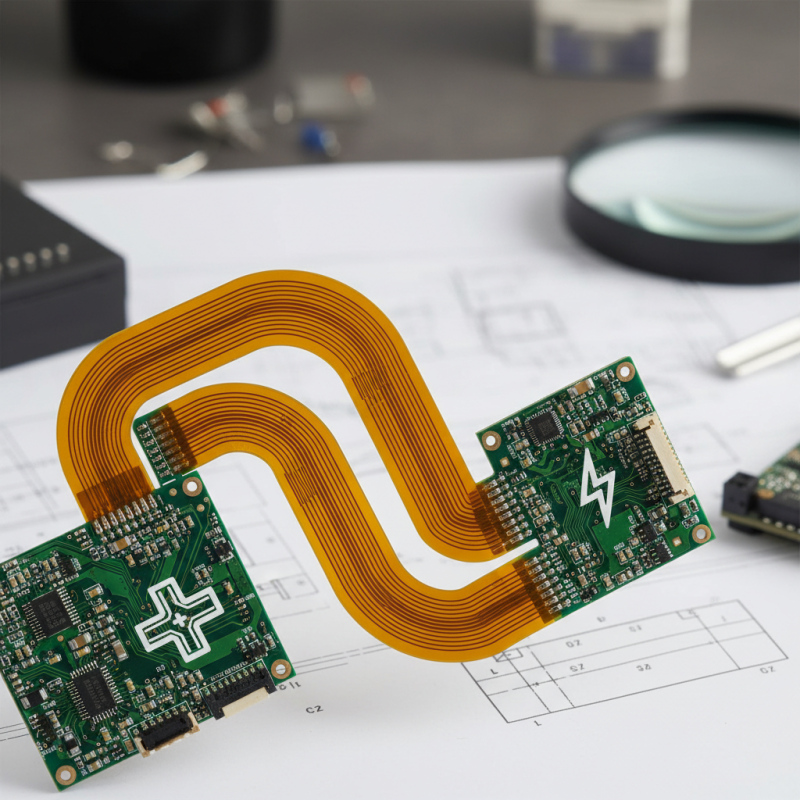
Rigid flex PCBs combine the best of both worlds: rigid and flexible designs. These boards enhance product durability and space efficiency.
According to a report by MarketsandMarkets, the global rigid flex PCB market is expected to grow significantly, reaching over $2.1 billion by 2025. This growth emphasizes their increasing importance in sectors like telecommunications, medical devices, and aerospace.
Understanding key concepts is crucial. Rigid flex PCBs consist of multiple layers, which can include copper, insulating materials, and adhesive layers. Their unique structure allows them to bend without losing integrity.
However, engineers must consider design complexities. Compatibility with existing manufacturing processes can pose challenges. The right material selection significantly impacts performance and reliability.
Decision-makers should also reflect on the specific application needs. For instance, certain environments may require enhanced thermal management features. Reliability tests can reveal weaknesses in design or material choices.
The balance between flexibility and rigidity might lead to compromises. Addressing these aspects ensures the final product meets industry standards for quality and performance.
Evaluating Application Needs: Flexibility, Space, and Performance
Choosing the right rigid flex PCB starts with understanding your application needs. Flexibility is crucial for devices that require bending and twisting. Many applications, like wearable technology or compact devices, benefit from lightweight and flexible materials. Evaluating how much flexibility is necessary can impact the overall design. Sometimes, designers opt for more rigidity than needed, leading to a less efficient product.
Space is another critical factor. A compact design often means limited real estate for components. Rigid flex PCBs can optimize space by combining rigid sections for component placement with flexible areas for connections. However, this might lead to challenges in thermal management and signal integrity. Mistakes occur when designers overlook these aspects. It's essential to strike a balance between size and functionality.
Performance is the last piece of the puzzle. High-frequency applications demand careful consideration of materials and layout. Some designs focus solely on form, neglecting how it affects performance. Interconnections, layer counts, and impedance control all play a role in achieving desired results. Reflecting on these elements can lead to more robust designs in the long run.
How to Choose the Best Rigid Flex PCB for Your Needs?
| Dimension |
Standard Metric |
High Performance |
Specialty Applications |
| Flexibility |
Moderate |
High |
Very High |
| Thickness |
0.5 mm |
0.2 mm |
0.1 mm |
| Temperature Resistance |
-40°C to 85°C |
-55°C to 125°C |
-60°C to 150°C |
| Layer Count |
4 Layers |
6 Layers |
8 Layers |
| Applications |
Consumer Electronics |
Medical Devices |
Aerospace |
Material Selection: Types of Substrates and their Properties
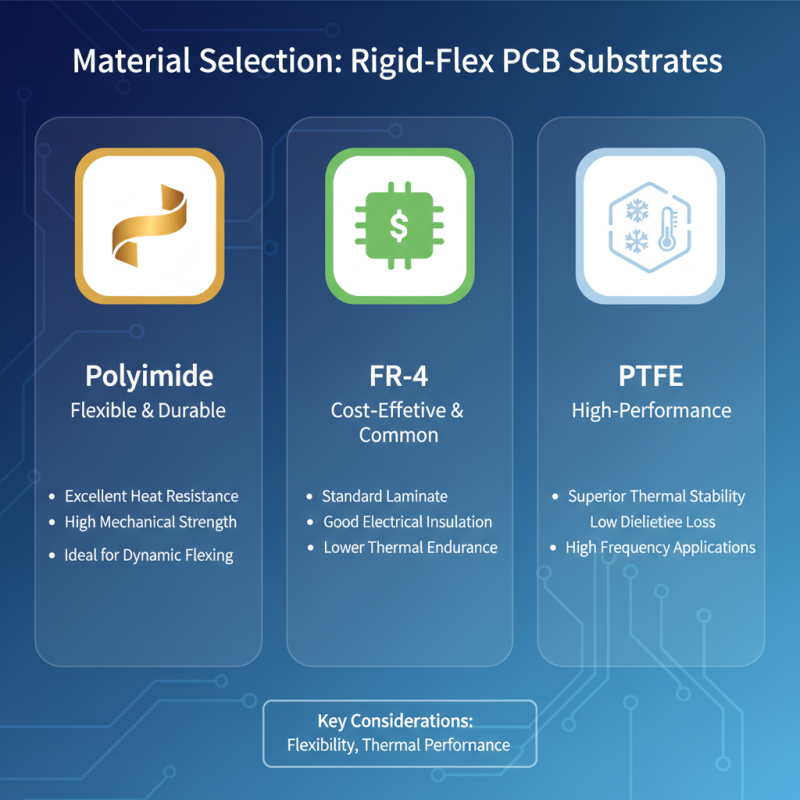
When selecting a rigid flex PCB, material choice plays a crucial role. Substrates determine flexibility, durability, and thermal performance. Common options include polyimide, FR-4, and PTFE. Each material offers distinct properties. Polyimide is known for its excellent heat resistance and mechanical strength. FR-4 is cost-effective and widely used, though it may not offer the same thermal endurance.
Thermal conductivity is a key factor for electronics. For high-performance needs, PTFE can be superior due to its low dielectric constant. However, it can be challenging to process. Many engineers overlook how substrate choice impacts signal integrity. It's essential to match the substrate to your specific application.
Some choices may seem straightforward but require careful consideration. Technical specifications can be overwhelming. Some materials may not perform as expected under varying conditions. Testing different substrates in practical scenarios is often necessary. This approach helps to identify any inconsistencies in performance. Balancing cost and performance is another challenge that many face.
Design Considerations: Layers, Layouts, and Connectivity
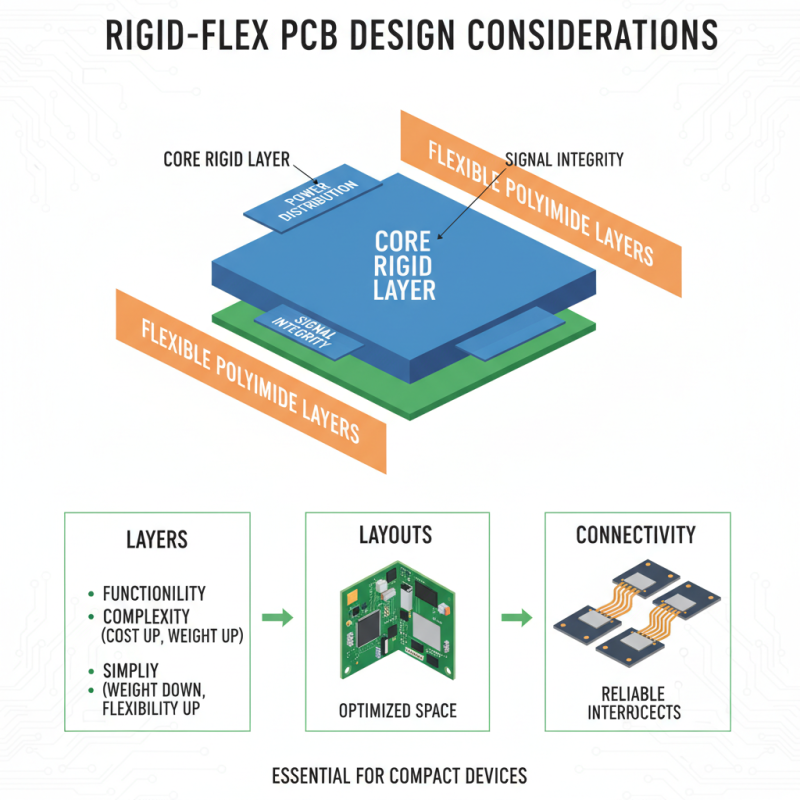
When selecting a rigid flex PCB, design considerations are crucial. Layers play a significant role in the functionality of your board. A standard rigid flex design might include inner layers for power distribution and signal integrity. More layers can provide increased complexity but may lead to higher costs. Simplifying layers can help reduce weight and improve flexibility, essential for compact devices.
Layouts determine how your components fit together on the PCB. A careful layout optimizes space and performance. Considerations include component placement, signal routing, and thermal needs. Each element needs attention. Poor layout can cause interference, impacting device performance.
Connectivity options are fundamental. Ensure your design supports various interfaces. Flexibility in connectivity allows for easier integration with other systems. However, over-complicating connections can lead to faults. Balancing simplicity and functionality is key. Making design choices that reflect a deep understanding of your needs can lead to successful implementation.
Cost Factors: Budgeting for Rigid Flex PCB Manufacturing and Assembly
When considering rigid flex PCB manufacturing, budgeting is crucial. Costs can vary significantly based on design complexity, materials, and production volumes. A simple design may be affordable, but intricate circuits require advanced techniques and materials, increasing expenses.
Material selection plays a vital role. High-quality materials often lead to better performance but come at a higher price. It’s essential to balance quality with your budget. Consider the specific needs of your application. Sometimes choosing a less expensive material could hinder the PCB's performance. This decision should reflect your long-term goals.
Assembly costs are another factor. Complex assembly processes can drive up labor expenses. You might need more skilled technicians to handle intricate designs. It’s wise to get multiple quotes and assess the total cost of ownership. Many overlook hidden costs, like shipping and testing. Always plan with these potential expenses in mind to avoid budget overruns. Analyze your needs thoroughly before making decisions.