
Blog

How to Choose the Best Environmentally Friendly Fans

Environmentally Friendly Fans can help circulate air with less electricity than many cooling options, but the label alone proves very little. A fan’s real impact depends on how efficiently it moves air, how often it runs, and how long it lasts. On a warm afternoon, a quiet model moving air across a desk may make a room feel more comfortable without cooling every corner. Small details matter.

When comparing models, check the rated airflow and power consumption together. A low-wattage fan is not automatically efficient if it moves very little air. Look for clear performance specifications, energy-use information, and a suitable speed range. The numbers help, but they need context. Consider your room size and where the fan will sit. A large floor fan may be excessive beside a reading chair, while a compact desk model may not reach across a shared workspace.

Noise matters. So does upkeep. Durable construction, replaceable parts, and a practical warranty can help keep a fan useful for longer. Check whether filters or other components require frequent replacement, and treat broad claims about recycled materials cautiously unless the manufacturer provides details. Personal experience can reveal comfort and noise, but measured specifications offer a better basis for comparison. Even then, no single feature tells the whole story.

The best choice balances airflow, energy use, repairability, and comfort in your actual space. You may not find a perfect option. Instead, compare credible product information, consider how you will use the fan, and choose one you can maintain rather than replace quickly.
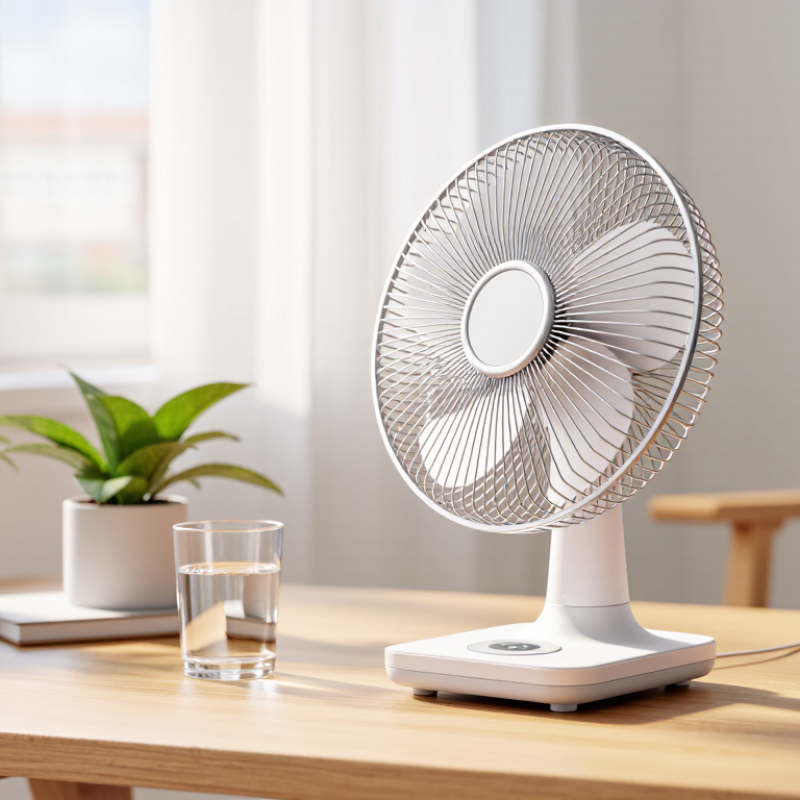
How to Choose the Best Environmentally Friendly Fans

Understanding What Makes a Fan Environmentally Friendly

An environmentally friendly fan moves plenty of air while using less electricity. Compare airflow, measured in cubic feet per minute, with power consumption in watts. The resulting airflow-per-watt figure helps you judge efficiency across different models. Look for independent testing or certification, not just claims on the box.

The International Energy Agency’s 2018 Future of Cooling report estimated that space cooling used nearly 2,000 terawatt-hours of electricity in 2016, about 10% of global electricity use. That wider context matters: an efficient fan can support comfort with less energy, especially when it reduces reliance on air conditioning. The U.S. Department of Energy notes that fans cool people through moving air, rather than cooling rooms. Use one only when someone is present. Small details matter. A timer, several speed settings, and a quiet motor can make that habit easier.

Materials and lifespan count, too. A replaceable control module or light kit may keep a whole fan from becoming waste after one part fails. Check whether the blades and housing are durable, and whether local recycling accepts their materials. A sleek finish is not proof of sustainability. I’d also question products with vague efficiency claims; clear wattage and airflow figures are more useful than green-sounding language.

Identifying Your Room’s Cooling Needs

Before choosing an environmentally friendly fan, notice how your room behaves through the day. A small bedroom with one person needs different airflow from a busy living room. Measure the floor area, then note ceiling height and whether furniture blocks open paths. A desk fan may cool one seated person, but it will not circulate air across a long room. Check where sunlight falls, too. A west-facing window can leave a room warm well into the evening.

Count the people who usually share the space, and consider what they are doing. Quiet, steady airflow may suit a bedroom, while a kitchen may need stronger circulation. Look for windows or doors that allow fresh air to move through, but remember that outdoor air can be warmer or more humid. I’ve seen people buy a powerful fan before checking placement. The result can be a breeze aimed at an empty corner. Room needs are easy to misjudge.

Tips: Sit where you usually work or rest, and feel whether air reaches that spot. Try a fan at different heights and angles before deciding. Check its noise at the speed you would actually use; a quiet low setting is not helpful if it barely moves air. Keep notes for a day. Your first estimate may be wrong, and that is useful information.

Comparing Fan Types and Energy Consumption

Fan type matters because each design moves air differently. A ceiling fan circulates air across a room, while a desk or pedestal fan directs airflow toward one person. Neither cools the room itself; both can make you feel cooler by helping sweat evaporate. Small details matter. A fan placed near your chair may let you use a lower setting. Many direct-current motor models use less electricity than comparable alternating-current models, but check the rated wattage and airflow rather than relying on motor type alone.

To compare energy use, multiply watts by operating hours, then divide by 1,000 for kilowatt-hours. A 40-watt fan running eight hours uses about 0.32 kilowatt-hours. Look for airflow-per-watt information when available, and compare fans suited to the same task. A compact fan may draw little power but fail to circulate air across a large room. Noise, blade size, and placement also affect whether you actually use it. A label is only a starting point; one watt figure does not tell the whole story.

Tips: Check the wattage label, then measure with a plug-in energy meter if practical. Clean dusty blades, and test lower settings before buying a larger fan. Measure, don’t guess. I still find real-room airflow harder to compare than the numbers suggest.

How to Choose the Best Environmentally Friendly Fans

Comparing estimated seasonal electricity use for common fan types

Estimates use representative power ratings and assume 8 hours of operation per day for 120 days. Seasonal use is calculated as watts × operating hours ÷ 1,000. Actual consumption varies by model, speed setting, and usage; compare product wattage labels for a more precise choice.

Assessing Materials, Durability, and Repairability

An environmentally friendly fan should be judged by what it is made of and how long it can stay in service. Look for clear material disclosures, such as recycled aluminum or steel in the housing, and check whether different plastics can be separated. A recycled-content claim is useful, but it says little about product life or end-of-life recovery. Small details matter. A metal grille that can be removed with ordinary screws is easier to clean and replace than one held by fragile clips.

Repairability is practical, not abstract. Check whether the motor, capacitor, switch, blades, and fasteners are available as replacement parts, and whether the manual explains safe maintenance. The Global E-waste Monitor 2024 reports that the world generated 62 million tonnes of e-waste in 2022; only 22.3% was documented as formally collected and recycled. A durable fan with replaceable parts can help avoid premature disposal, though no single product choice fixes that wider problem. Ask about warranty length and parts availability before buying. A long warranty is reassuring, but it is not proof that repairs will be affordable. That distinction is easy to miss.

How to Choose the Best Environmentally Friendly Fans — Assessing Materials, Durability, and Repairability

Fan construction type Common materials Durability considerations Repairability considerations End-of-life considerations What to check before buying
Metal desk or floor fan Often steel or aluminum housing and grille, with copper motor windings and some plastic controls or components. Metal parts can resist impact better than thin plastic, but coatings may scratch and exposed steel can corrode in damp conditions. A screw-fastened grille and accessible blade, switch, cord, or motor assembly can make service easier. Check whether replacement parts are actually sold. Metal is generally recyclable where local facilities accept it. Mixed materials and attached electrical parts may require separation. Look for removable grilles, standard fasteners, a replaceable power cord, and published parts or service information.
Plastic pedestal fan Commonly molded thermoplastic for the base, stand, blades, and grille, plus metal motor components and wiring. Quality varies. Plastic can be lightweight and corrosion-resistant, but thin parts may crack under impact or after prolonged exposure to sunlight and heat. Snap-fit parts can be difficult to remove without damage. Repair is more practical when the grille, blade, controls, and motor can be replaced separately. Plastic recycling depends on resin type, local collection rules, and whether parts can be separated. A recycling symbol alone does not guarantee local acceptance. Check for resin identification where available, durable joints, replaceable parts, and a stable base that does not rely on fragile clips.
Ceiling fan Typically includes a steel mounting bracket, motor and wiring, and blades made from wood, engineered wood, metal, or plastic. Longevity depends on motor quality, installation, operating conditions, and maintenance. Wood-based blades should be kept dry; metal parts can corrode in humid or coastal settings. Replaceable blades, capacitors, receivers, and controls can extend service life, but compatibility varies. Electrical work should be handled safely and in accordance with local requirements. The motor, wiring, metal bracket, and blades contain different materials, so disassembly may be needed for appropriate recycling or disposal. Confirm that replacement blades and compatible controls are available, and check the installation requirements and warranty terms.
Box or circulator fan Often a plastic or metal housing and grille, plastic blades, copper wiring, and a motor assembly. A rigid housing and securely attached grille help withstand routine handling. Dust buildup can reduce performance, so accessible cleaning areas matter. Fans designed with removable grilles are easier to clean. Repair options depend on whether the motor, switch, cord, and blade assembly can be serviced separately. The housing may combine several materials. Check local rules for electrical equipment rather than putting a complete fan in household recycling. Prefer a grille that can be removed for cleaning, durable fasteners, and accessible replacement parts.
Fan with recycled-content materials May use recycled metal or recycled plastic in selected components; the amount and locations vary by product. Recycled content alone does not establish strength or service life. Construction quality, operating conditions, and maintenance remain important. Repairability depends on the product’s design and parts support, not simply on whether its materials are recycled. Recyclability depends on material type, component separation, and local facilities. Recycled content and recyclability are separate attributes. Look for clear, component-specific recycled-content information and verify that durability, repair, and end-of-life details are also provided.

Note: These are general construction characteristics, not guarantees for every fan. Materials, service options, and local recycling rules vary. A longer-lasting fan with replaceable parts may avoid premature replacement, so compare the actual product documentation rather than relying on material labels alone.

Choosing Efficient Features for Your Budget and Space

Begin with the room, not the advertised blade count. Measure its width and ceiling height before comparing models. Low ceilings usually suit flush-mount fans, while taller rooms may need a downrod to position the blades effectively. Check where the fan will hang. A low fixture over a bed or dining table can feel intrusive. Small detail, big difference.

Set a budget that includes installation and any separate light kit. ENERGY STAR’s ceiling-fan guidance reports that certified models are about 60% more efficient than conventional fan-and-light combinations. Compare airflow and wattage, not just the purchase price; a larger fan is not automatically the better fit. Check the label. A dimmable light and several speed settings may be useful, but only if you will use them.

The U.S. Department of Energy’s Energy Saver guidance notes that a ceiling fan can help people feel comfortable at a thermostat setting about 4°F higher in warm weather. Fans cool people, not empty rooms, so switch one off when you leave. For a desk or rental room, a portable fan may cost less and need no installation. Still, noise and awkward placement can spoil the bargain; specifications rarely capture that.