What Are Ice Bath Pods and How Do They Work?
Ice Bath Pods are insulated containers designed to hold cold water for brief immersion. They may look simple, but their function depends on temperature control, insulation, and safe user habits. A typical pod uses a flexible liner, sturdy frame, drain, and sometimes a cooling unit. Without a chiller, users add ice and monitor the water with a thermometer. With a chiller, the system circulates water through a cooling mechanism, helping maintain a more stable temperature.
The body reacts quickly to cold water. Skin blood vessels narrow, breathing may become faster, and the nervous system shifts into a strong alert state. Many people describe the first seconds as shocking, followed by a calmer, focused feeling. Research suggests possible benefits for perceived recovery and soreness, but the evidence is still developing. Cold exposure is not a guaranteed performance solution. That matters.
Safe use requires more than enduring discomfort. Beginners should enter gradually, keep sessions brief, and avoid treating numbness as progress. A nearby person can provide practical support, especially during the first attempts. People with heart, circulation, blood pressure, or other medical concerns should seek professional advice before using an Ice Bath Pod. Alcohol and cold immersion are a poor combination. The cold can also hide warning signs until they become difficult to ignore.
This guide explains how Ice Bath Pods work, what their main components do, and where their limits appear. It also questions popular claims instead of repeating them automatically. The technology is useful, but not magical.
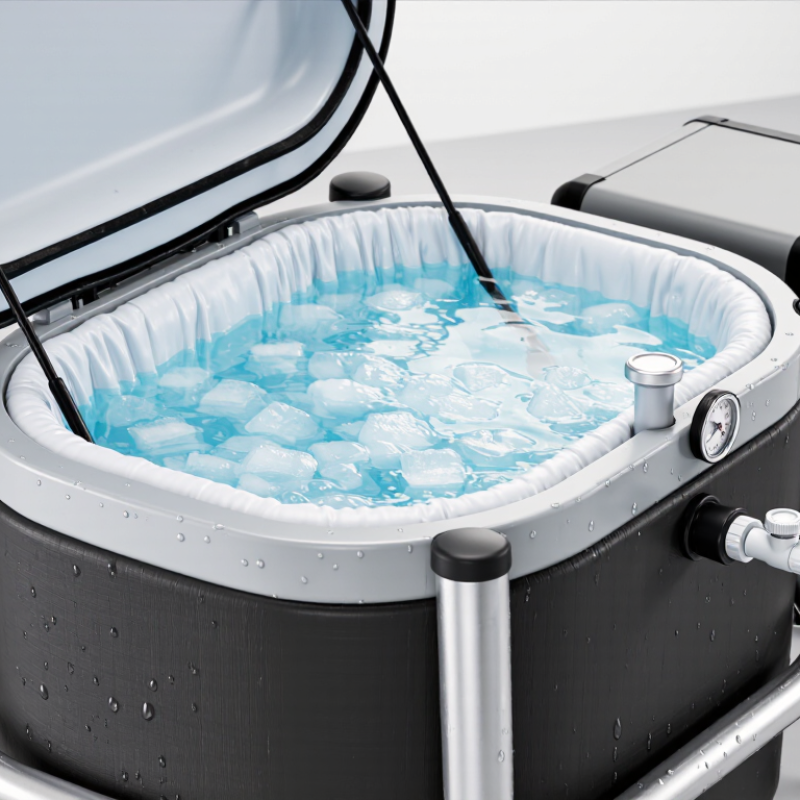
What Are Ice Bath Pods? Core Parts, Materials, and 250–500 L Capacity
Ice bath pods are compact cold-water immersion systems designed to hold the body below the shoulders. Their common parts include an insulated outer shell, waterproof liner, drain valve, fitted cover, thermometer, and optional filtration or cooling equipment. Some units also use a circulation pump to reduce warm pockets around the skin.
Capacity matters more than appearance. A 250-liter pod contains about 250 kilograms of water, while a 500-liter pod holds roughly 500 kilograms before adding the user. The exact usable volume changes with body size and internal shape. Materials usually include reinforced PVC, coated fabric, acrylic, fiberglass, or molded plastic. Insulation slows heat gain, but it does not eliminate it. That distinction is easy to miss.
The pod works through conduction and convection. Cold water draws heat from the skin, triggering vasoconstriction and a noticeable cold-shock response. Water temperature, exposure time, body position, and circulation all affect the experience.
The Global Wellness Institute reported a wellness economy worth 6.3 trillion dollars in 2023, with a projection of 9 trillion dollars by 2028. That growth supports wider interest in recovery equipment, but it does not prove that every cold-water claim is reliable. Evidence remains mixed.
The American College of Sports Medicine also stresses gradual exposure, monitoring, and individual risk assessment. A pod is not automatically safer because it looks professional. Temperature readings can drift, filters need maintenance, and crowded water increases hygiene concerns.
Never treat “colder” as automatically better.
How Ice Bath Pods Reach 10–15°C Through Cooling and Circulation
What Are Ice Bath Pods and How Do They Work?
How Ice Bath Pods Reach 10–15°C Through Cooling and Circulation
Ice bath pods are insulated containers designed to cool and hold water at a controlled temperature. Many systems use a compact refrigeration unit, heat exchanger, pump, and digital thermostat. The cooling unit removes heat from the water, while the pump moves water through the system and returns it to the pod. This circulation helps reduce warm and cold spots around the body.
Reaching 10–15°C usually takes time. A covered, well-insulated pod cools more efficiently than an open container. Starting water temperature, room temperature, water volume, and filter condition all affect performance. At 10°C, the water feels sharply cold within seconds. At 15°C, breathing may feel easier, but the immersion can still be demanding. A reliable thermometer remains useful, even when the control panel looks precise.
Water movement matters. Without circulation, warmer water can collect near the skin, creating uneven readings. With steady flow, the temperature becomes more consistent throughout the pod. However, circulation does not make the water instantly cold. That assumption is easy to make.
From practical testing, a gradual entry and short exposure are more manageable than forcing a long session. People with heart, circulation, or cold-sensitivity concerns should seek medical advice before using an ice bath. Temperature displays can also drift, so checking the actual water with a separate thermometer is a sensible habit.
How to Use an Ice Bath Pod Safely: 5–15 Minutes of Cold Exposure
An ice bath pod is an insulated container designed to hold cold water around the body. Some models use ice, while others rely on chilled water. The cold quickly draws heat from the skin and causes blood vessels to narrow. This can create a strong, controlled stress response. It is uncomfortable by design, but pain is not a useful target.
Fill the pod with cold water and add ice gradually. Test the temperature with a thermometer, not your hand alone. Enter slowly, keeping your head and neck above the water. Start with about five minutes. Experienced users may extend exposure toward ten or fifteen minutes, but longer is not automatically better. Keep a clock nearby, and exit immediately if you feel dizzy, confused, unusually weak, or develop chest discomfort. Never use the pod alone.
Breathe slowly instead of forcing deep breaths. Shivering can happen, but violent or persistent shivering signals that you should get out. Dry yourself, put on warm layers, and reheat gradually afterward. Avoid alcohol before or during cold exposure. People with heart conditions, circulation problems, uncontrolled blood pressure, diabetes, pregnancy, or cold sensitivity should seek medical advice first. I once underestimated how quickly cold water affected my hands; the lesson was simple: preparation matters more than toughness. A shorter session is still a valid session.
How Cold Water Affects the Body: Vasoconstriction Below 15°C
What Are Ice Bath Pods and How Do They Work?
How Cold Water Affects the Body: Vasoconstriction Below 15°C
Ice bath pods are insulated containers designed to hold cold water around the body. Some use simple ice and water, while others regulate temperature through circulation and cooling systems. The aim is consistent exposure, not extreme discomfort. Water transfers heat faster than air, so even a short session can feel intense.
Below about 15°C, the body begins narrowing blood vessels near the skin and limbs. This response is called vasoconstriction. It reduces blood flow to the surface and helps protect the body’s core temperature. Fingers may feel stiff, pale, or numb. The heart may also work harder as blood pressure rises, especially during sudden immersion.
Cold water can trigger rapid breathing. That reaction may feel alarming during the first moments. Slow, controlled breathing is more useful than forcing stillness. The response differs with body size, health, water temperature, and previous exposure. It is not perfectly predictable.
A pod does not make cold exposure automatically safe. Entering gradually and keeping the head above water can reduce unnecessary risk. People with heart, circulation, blood pressure, or cold-sensitivity conditions should seek medical advice before trying it. I once underestimated how quickly numbness could dull judgment. That detail deserves more respect.
Ice Bath Pod Hygiene: Filtration, Water Changes, and Disinfection Standards
Ice bath pods combine a cold-water basin with a pump, filter, and cooling system. Their hygiene depends on every part working together. Cold water slows bacterial growth, but it does not sterilize the pod. A clean-looking surface can still carry microorganisms.
Filtration removes particles, skin cells, and some organic matter. It does not replace disinfection. Use a filter rated for the pod’s flow system, and inspect it for slime, discoloration, or reduced water movement. Replace it according to measured performance, not appearance alone. Clarity proves little. Clean the basin, drain, cover, and fittings during every service.
Water-change frequency should reflect usage, temperature, filtration, and whether the pod is shared. Private users may follow a documented schedule, while shared pods usually require more frequent changes and cleaning between users. Test water regularly with suitable strips or a meter. Disinfectants must match the equipment and follow the stated contact time. Too little product may leave pathogens behind; too much can damage materials or irritate skin. Never mix cleaning chemicals.
A written log improves consistency. Record water changes, filter replacement, test results, and unusual odors. Keep records. Inspect hidden areas, especially around drain covers and pipe connections. If the sanitation method has not been validated, increase water changes and seek guidance from a qualified water-treatment professional. In practice, convenience often weakens hygiene routines, so the procedure should remain simple, visible, and easy to repeat.
What Are Ice Bath Pods and How Do They Work?
Ice Bath Pod Hygiene: Filtration, Water Changes, and Disinfection Standards
The chart shows commonly used public-health reference levels for disinfectant residuals in spa-like water systems: free chlorine should be at least 3 ppm, while free bromine is commonly maintained between 4 and 6 ppm. Ice bath pods do not have one universal international hygiene standard, so operators should follow local regulations and the equipment manufacturer’s instructions.
Filtration removes suspended particles but does not replace disinfection. Water should be tested regularly, the filter should be cleaned according to its loading condition, and the pod should be drained, cleaned, and refilled whenever water quality cannot be reliably maintained or after a high-contamination event.