
Blog

Top FOC Motor Controller Manufacturers for Global Buyers

Choosing a Foc Motor Controller is not just a matter of comparing headline power ratings. Global buyers must consider motor type, voltage range, continuous and peak current, control interfaces, cooling, and available technical support. A unit that performs well on a test bench may behave differently inside a compact vehicle, pump, or automation system. Heat, vibration, wiring length, and sensor quality all affect real-world results.

Prof. R. Krishnan is a recognized motor-drive researcher and author. A practical principle consistent with his field of work is: “Reliable motor control depends on matching the drive, motor, and operating conditions.” This is an editorial paraphrase, not a verified verbatim quotation. It captures an important buying lesson. Check how a manufacturer handles encoder feedback, current sensing, tuning tools, protection features, and thermal limits. Ask for test data under conditions close to your own application.

This guide compares leading Foc Motor Controller manufacturers for international buyers. It examines product range, customization, documentation, production capability, and after-sales support. Look beyond polished specifications. Request clear answers about sample testing, firmware updates, lead times, and service procedures. Small details matter. A missing wiring diagram or unclear fault code can delay commissioning. No supplier is ideal for every project, and available public information may not reveal every limitation. Use the comparisons as a starting point, then verify critical requirements directly with each manufacturer.
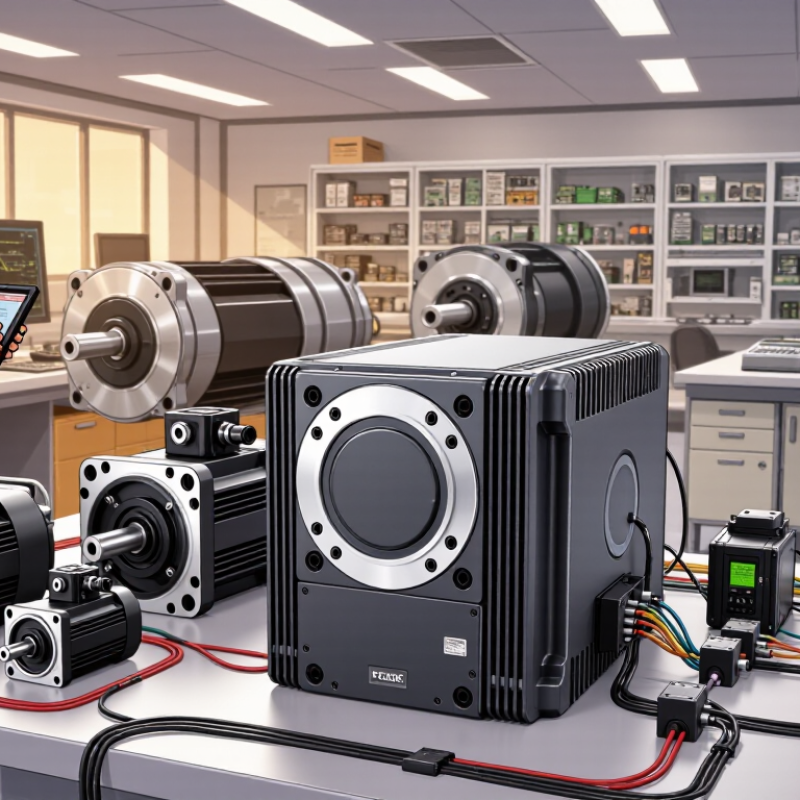
Top FOC Motor Controller Manufacturers for Global Buyers

What FOC Motor Controllers Do and Where They Are Used

A field-oriented control (FOC) motor controller regulates a motor’s magnetic field and torque by coordinating its phase currents. It measures current and uses rotor-position feedback—or an estimate—to adjust power rapidly. In practical terms, this can mean smooth torque from a compact pump motor, quieter fan operation, or controlled acceleration in a mobile machine. The control loop works continuously. Small timing errors matter.

The U.S. Department of Energy’s Improving Motor and Drive System Performance sourcebook reports that motor-driven systems use about 68% of electricity in U.S. industrial manufacturing. That figure explains why precise motor control matters, though it does not mean FOC alone delivers a fixed energy saving. FOC is common in permanent-magnet motors used in pumps, fans, robotics, HVAC equipment, and electric vehicle traction. It can improve low-speed control and reduce torque ripple, but performance depends on motor parameters, sensing, and tuning. Sensorless control can struggle near zero speed. A caveat worth testing. Engineers should measure efficiency and temperature under the actual load; a polished controller specification is not a field result.

Top FOC Motor Controller Manufacturers for Global Buyers – What FOC Motor Controllers Do and Where They Are Used

Application / Controller Class What the FOC Controller Does Common Motor Types Typical Supply or DC-Bus Range Where It Is Used Key Checks for Global Buyers
Compact embedded drives Regulates motor current and torque by controlling the motor’s magnetic field; can support quiet, smooth low-speed operation. Three-phase BLDC and permanent-magnet synchronous motors (PMSM) Often designed for low-voltage DC systems, such as 12–60 V; confirm the controller’s specified operating limits. Fans, pumps, small appliances, camera gimbals, and compact automation equipment Board or enclosure dimensions, cooling, sensor support, firmware access, and protection features
Electric mobility drives Adjusts phase currents to meet requested speed or torque while monitoring current, temperature, and DC-bus conditions. PMSM and BLDC traction motors Common battery systems include 24, 36, 48, 60, and 72 V; higher-voltage designs are also used. Match the controller to the battery’s full voltage range. E-bikes, scooters, light electric vehicles, and material-handling vehicles Continuous and peak current ratings, regenerative braking, environmental rating, safety requirements, and local vehicle regulations
Low-voltage industrial drives Uses measured or estimated rotor position to coordinate motor phase currents for controlled speed and torque. PMSM, BLDC, and—in suitable drive designs—induction motors Often built for DC buses in the 24–120 V range; exact limits depend on the drive design. Conveyors, packaging equipment, robotics, automated guided vehicles, and machine tools Encoder or resolver compatibility, fieldbus options, braking resistor support, EMC documentation, and thermal performance
AC-input industrial inverter drives Converts incoming power to a controlled motor output; vector-control implementations can provide precise torque and speed regulation. Induction motors and PMSM, depending on the drive’s supported modes Common input classes include 200–240 VAC and 380–480 VAC, single- or three-phase as specified. Internal DC-bus voltage is higher than the AC input’s RMS voltage. Pumps, fans, compressors, machine tools, and production lines Input phase and frequency, motor nameplate data, overload duty, harmonic or EMC needs, safety functions, and regional approvals
Servo and precision-motion drives Combines current control with feedback-based position or speed loops for accurate, responsive motion. Servo PMSM and other feedback-equipped synchronous motors Varies by platform, from low-voltage DC systems to drives supplied from industrial AC mains. CNC equipment, pick-and-place machines, printing systems, and industrial robotics Feedback device and resolution, control-loop performance, command interface, tuning tools, and system-level safety compatibility

Buyer note: Field-oriented control (FOC) controls motor torque by regulating current in a rotating reference frame aligned with the rotor’s magnetic field. Voltage, current, power, and performance ranges vary by model and operating conditions; verify ratings against the motor, supply, cooling method, and applicable regional standards.

How to Evaluate FOC Motor Controller Manufacturers

To evaluate FOC motor controller manufacturers, look beyond peak efficiency claims. The IEA estimates that motor systems consume about 45% of global electricity (Energy-Efficient Electric Motor Systems, 2011). A U.S. Department of Energy sourcebook reports a 68% share of industrial electricity use for motor-driven systems in the United States (2014). These figures use different boundaries, but both show why drive performance matters.

Ask for test data across the motor’s actual speed and torque range, not one ideal operating point. Check current-loop response, low-speed torque, sensorless startup, and behavior during sudden load changes. Ask for proof. Request thermal results at the intended ambient temperature, plus protection thresholds and EMC test documentation. Efficiency maps aligned with IEC 61800-9-2 can help compare performance at defined operating points. Still, lab results may not match a cramped enclosure or a noisy production line.

Review how the supplier validates motor compatibility, firmware updates, fault logs, and long-term component availability. A practical trial should run your motor, cable length, and load profile for several hours. Watch for overheating, vibration, and unstable speed during starts. Good documentation helps. Yet even a thorough evaluation cannot remove every integration risk; request clear limits, response times, and sample data before committing.

Top FOC Motor Controller Manufacturers for Global Buyers

How to Evaluate FOC Motor Controller Manufacturers

Suggested evaluation weights for comparing suppliers—not measured manufacturer scores or a market survey. Adjust the priorities to match your motor, operating environment, and project requirements.

Major FOC Motor Controller Manufacturers and Their Product Focus

FOC motor controller manufacturers generally specialize in integrated drives, high-power industrial units, or application-specific designs. The International Energy Agency’s 2011 Technology Roadmap estimated that electric motor systems use about 45% of global electricity. That figure helps explain why buyers compare efficiency, thermal behavior, and control quality—not just rated power. A controller that runs smoothly on a test bench may still overheat inside a sealed pump enclosure.

Integrated-drive manufacturers combine the controller and motor, reducing wiring and installation space. Their products often suit compact pumps, fans, and mobile machinery. Industrial-drive manufacturers focus on wider voltage ranges, fieldbus options, and overload capacity for production equipment. Custom suppliers may tune current limits, encoder support, and firmware for a specific machine. Details matter. Buyers should ask for continuous-current ratings, not only brief peak figures, and check performance at low speed under load.

Product focus also varies by feedback method. Sensor-based FOC can maintain torque at very low speeds, while sensorless control can reduce wiring and simplify assembly. Neither choice fits every machine. A conveyor with changing loads may need reliable encoder feedback; a small fan may favor simpler sensorless operation. Request test curves, cooling requirements, and fault-response details for the actual operating range. Datasheets alone can leave gaps. A short on-site trial may reveal vibration or noise that laboratory numbers miss.

How Manufacturers Differ in Technology, Certifications, and Support

Field-oriented control (FOC) performance depends on more than a headline efficiency figure. Buyers should compare low-speed torque stability, sensor options, thermal limits, and tuning tools using the same motor and load conditions. The International Energy Agency’s Global EV Outlook 2024 reported nearly 14 million electric-car sales in 2023, around 18% of global sales. It projected more than 17 million in 2024. This expansion makes reliable drive integration increasingly important, but an EV sales forecast does not prove any controller will suit a specific machine. Check the test conditions.

Certifications also differ in scope. ISO 9001 can indicate a quality-management system; it does not certify a controller’s operating performance. For industrial drives, buyers may review EMC evidence against IEC 61800-3 and functional-safety documentation where relevant. Ask for certificates, test reports, and the exact product or facility covered. Regional approvals and customer requirements can vary. Support matters just as much. Request firmware change records, parameter backup procedures, response-time commitments, and access to application engineers. A useful test is whether support staff can help interpret a fault log, not merely send a manual.

One uncomfortable truth: published specifications can look stronger than results on a hot machine with long cables.

Pilot testing remains worthwhile.

How Global Buyers Can Compare Suppliers and Qualify Products

Global buyers should compare FOC motor controller suppliers against the same operating requirements, not just headline current ratings. Share the motor’s voltage range, continuous and peak current, speed range, cooling method, and intended duty cycle. Then check whether each supplier’s specifications match those conditions. Small differences matter. A controller rated for a brief peak may not sustain that load in a sealed enclosure.

Request test reports that identify the test setup, ambient temperature, load, and measurement method. Ask how the supplier verifies current control, startup behavior, fault protection, and thermal performance. If possible, review data from a sample unit under your own motor and load. Test under load. Also examine firmware tools, communication interfaces, documentation quality, and the process for handling design changes. A polished datasheet cannot reveal every integration problem.

Qualification should include practical checks of lead times, component availability, technical response times, and production consistency. Ask for sample traceability and clear acceptance criteria before placing a larger order. Compare total integration effort, not only unit price; extra tuning hours can erase an apparent saving. No checklist removes all risk. Test results may differ from real installations, and buyers sometimes discover requirements late. Record those gaps, agree on corrective actions, and keep the evaluation consistent across suppliers.