Who Are the Top Skin Analyzer Device Manufacturers in China?
Choosing a Skin Analyzer Device manufacturer in China is not just a search for the lowest quoted price. Buyers also need to understand what a device measures, how clearly it presents results, and what support follows installation. A bright touchscreen can look impressive in a showroom. Reliable performance requires closer inspection.
This guide explores manufacturers serving clinics, beauty businesses, and equipment distributors. It focuses on practical comparison points, including imaging methods, measurement consistency, software usability, training, warranty terms, and customization options. Ask for clear product specifications and a live demonstration. Check whether sample reports are understandable, and confirm how the company handles software updates and service requests. These details can matter more than a polished brochure.
No single supplier fits every buyer. Some companies may excel at product development, while others offer stronger export experience or responsive technical support. Company claims should be checked against current documents, demonstrations, and direct conversations. A factory visit can help, but it cannot replace careful testing. That distinction is easy to miss.
The comparisons ahead are intended as a starting point, not a final verdict. Product lines and service quality can change, and available public information may not tell the whole story. Readers should verify important claims before making a purchase. Small details matter. A confusing interface or delayed repair response can shape the daily experience as much as image quality.
Skin Analyzer Devices: Definition, Functions, and Applications
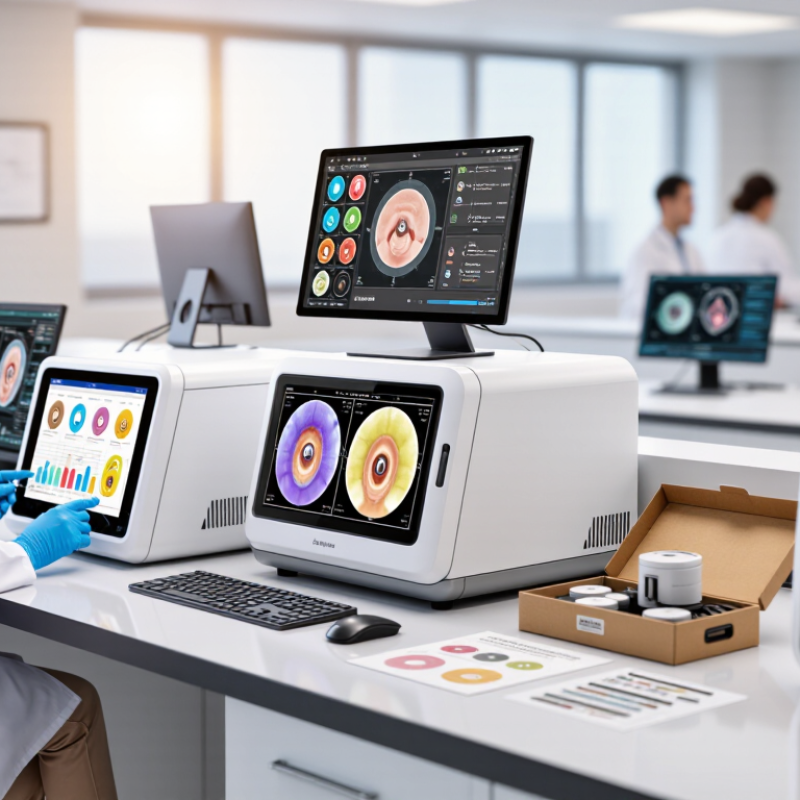
Skin analyzer devices use cameras, controlled lighting, and sensors to assess skin at the surface and, in some systems, beneath it. They commonly measure pore visibility, pigmentation, redness, wrinkles, oiliness, and hydration. Some models combine polarized or multispectral images with software that compares facial areas and tracks changes over time. Useful, but not diagnostic. Results can guide consultations, skincare planning, and product research; they cannot replace clinical judgment. Lighting, camera distance, makeup, and device calibration can shift readings. Skin tone may also affect how images are captured or interpreted. A precise-looking score is not automatically a reliable one.
In clinics and aesthetic practices, professionals may use baseline images to explain concerns and monitor changes across visits. Retail settings can use scans to support product discussions, while researchers can compare skin responses under consistent conditions. The ISAPS 2023 Global Survey reported 19.1 million nonsurgical aesthetic procedures worldwide. This figure describes the broader consultation landscape, not analyzer use or proven treatment outcomes. Practitioners should explain what a device measures and avoid promising results from one scan. A small change may be meaningful, or simply noise. That distinction deserves attention.
China’s Skin Analyzer Manufacturing Industry
China’s skin analyzer manufacturing industry combines optical hardware, software, and practical production control. A device may use polarized lighting, multispectral imaging, and a calibrated camera to show pores, pigmentation, or surface oil. Small details matter. Uneven illumination can change an image, even when the software appears polished. Manufacturers therefore need repeatable lighting, stable camera settings, and clear testing procedures—not just attractive screens.
Demand offers context, but it should not be confused with device sales. China’s National Bureau of Statistics reported cosmetics retail sales of RMB 414.2 billion in 2023, up 5.1% year on year. This figure describes the wider consumer market, not skin analyzers specifically. The distinction matters. For manufacturers, a more useful evaluation checks image consistency across sessions, software updates, user training, and after-sales support. Product classification can also depend on intended use and claims, so requirements should be checked against applicable NMPA rules. The industry’s picture is not perfectly tidy: impressive imaging does not always mean dependable analysis. Independent validation remains essential.
Leading Skin Analyzer Device Manufacturers in China
Leading skin analyzer device manufacturers in China are best assessed by measurement consistency, not by screen size or feature count. The National Bureau of Statistics of China reported 2023 cosmetics retail sales of RMB 414.2 billion, up 5.1% year on year. This reflects a large beauty market, but it does not measure analyzer sales directly. Buyers should treat market growth as context, not proof of device quality.
In practice, compare how manufacturers control lighting, image capture, calibration, and software scoring. Ask for repeatability results under the same room conditions, plus clear descriptions of tested skin parameters. Small details matter. A bright image is not necessarily an accurate one.
China-based suppliers may offer local engineering, OEM production, and shorter communication loops, but capabilities vary widely. Review sample reports, service response times, and quality-control records before choosing a partner. Not just pixels.
One limitation is that public, independent comparisons of Chinese analyzer makers remain scarce, so polished product claims deserve careful verification. Manufacturers that disclose test methods and known measurement limits offer a more credible basis for evaluation.
Core Technologies and Product Types
Chinese skin analyzer manufacturers typically build around high-resolution RGB imaging, cross-polarized light, UV illumination, and multispectral capture. Each method reveals different details: polarized images reduce surface glare, while UV images can highlight pigmentation patterns. Some systems add 3D scanning to map pores, wrinkles, and facial contours. More light is not always better.
Product types range from handheld probes and desktop cameras to salon kiosks and clinic-grade imaging systems. Software may compare facial zones, estimate oiliness, or track changes across visits. The Global Wellness Institute’s 2024 Global Wellness Economy Monitor valued the wider wellness economy at US$6.3 trillion in 2023. It does not isolate skin analyzers, so this figure offers market context, not proof of device demand. Buyers should check image consistency, calibration procedures, and whether software explains its scoring limits.
Tips: Capture images under repeatable lighting, with the same distance and facial position. Ask for validation details, not just colorful charts. A vivid map is not a diagnosis. Even useful measurements can mislead when skin is oily, recently washed, or unevenly lit.
Factors for Comparing Chinese Skin Analyzer Manufacturers
Comparing Chinese skin analyzer manufacturers requires more than checking resolution or feature lists. Grand View Research estimated the global skin care devices market at about US$17.8 billion in 2023, with projected growth through 2030. That figure covers a broad device category, not skin analyzers alone. Still, it signals a crowded, fast-moving market. Growth is not proof of accuracy.
Ask for repeatability data from the same device, operator, and lighting conditions. Request test details: sample size, skin-tone range, image capture distance, and calibration frequency. Useful demonstrations show consistent readings under controlled lighting, not just polished before-and-after images. Small differences matter. Check whether the software explains how it calculates hydration, pores, or pigmentation scores, and whether those outputs are clinically validated or intended for cosmetic reference only.
Manufacturing quality deserves equal attention. Review quality-control records, component traceability, warranty terms, and the availability of replacement parts. Ask who handles software updates and how long repairs typically take. A clear answer matters. Compare training materials and technical support in the languages your staff use. Industry reports describe market scale, but they cannot verify a factory’s individual performance. That gap is easy to overlook. Request documents and a live workflow trial before judging a supplier’s claims.
Who Are the Top Skin Analyzer Device Manufacturers in China?
Factors for Comparing Chinese Skin Analyzer Manufacturers
The chart shows an illustrative 100-point buyer evaluation framework, not market-survey results or rankings of manufacturers. Compare documented measurement repeatability, imaging capabilities, calibration, software, workflow, service support, and data-protection practices when assessing suppliers.