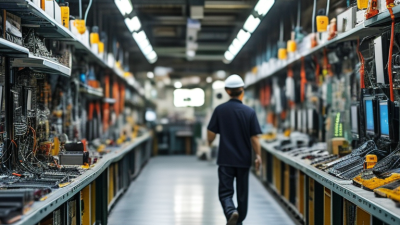
Wire harness assembly is a quiet discipline with visible consequences. Behind a vehicle dashboard or inside an industrial machine, dozens of wires must follow the right paths, fit secure terminals, and withstand heat and vibration. A loose crimp may look minor on a workbench. In service, it can interrupt an entire system.
Robert Bosch, an automotive electrical-systems pioneer, is often credited with saying, “I have always acted according to the principle that it is better to lose money than trust.” His words are not specifically about wire harness assembly, but they reflect a useful manufacturing principle: a low quote means little without dependable process control. Buyers should examine crimping methods, continuity testing, material traceability, engineering support, and the supplier’s ability to handle design changes. Factory photos help, but they do not prove consistent quality.
This guide introduces ten wire harness assembly manufacturers in China. It considers product focus, production capabilities, quality practices, and experience serving different industries. The list can help narrow a search, not replace a supplier audit. Ask for sample builds. Check documentation. Discuss delivery risks plainly. China’s manufacturing base is broad, and capabilities vary from one facility to another. That distinction is easy to miss.
There is no perfect shortlist. A capable supplier may still be the wrong fit for a complex prototype or a small production run. The details matter.
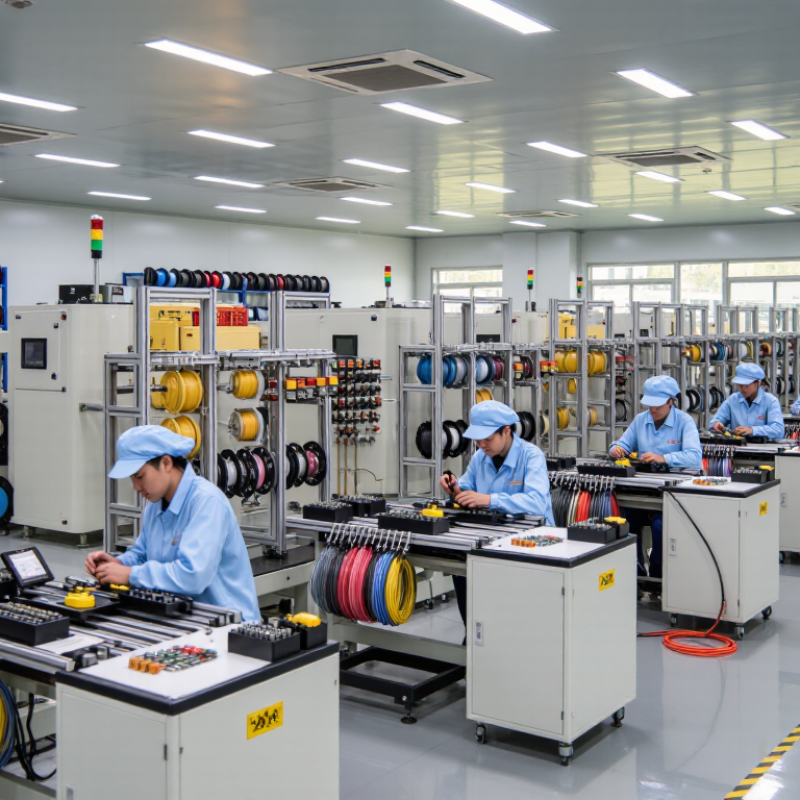
A vehicle harness with 1,000 or more wires is not one cable. It is a network of branches serving the battery, powertrain, lighting, sensors, cabin controls, and driver-assistance systems. Assemblies may combine low-voltage circuits, high-voltage cables, connectors, seals, clips, and protective sleeves. Small branches matter. A misplaced clip can create a rub point; a weak crimp can cause intermittent signals that are difficult to trace.
The International Energy Agency’s Global EV Outlook 2024 projected about 17 million electric-car sales worldwide that year, exceeding one in five new cars. This shift increases demand for carefully separated high-voltage and low-voltage circuits, battery connections, and charging-system wiring.
For manufacturers, practical checks include continuity testing, insulation testing, crimp inspection, and verification against vehicle-specific routing drawings. Testing matters.
Production quality also depends on clear work instructions and traceable inspection records. A harness may pass an electrical test yet still be difficult to install if branch lengths or connector orientations are wrong. That detail is easy to underestimate. The IEA figure describes market growth, not wire counts; buyers should assess each supplier’s actual design, testing, and process-control evidence before comparing capacity.
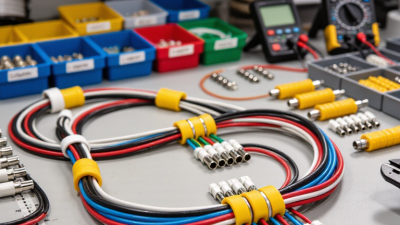
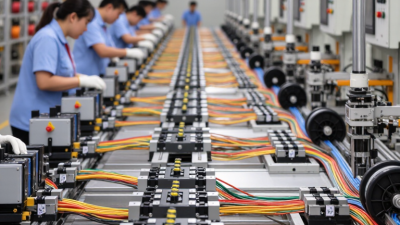
Wire harness production starts with wire cutting and stripping. Programmable cutters set each lead’s length, while blades remove insulation without nicking copper strands. A damaged strand may pass a quick visual check, yet weaken the connection. Terminal crimping follows: a calibrated applicator compresses the terminal around bare wire, and operators check pull strength and crimp dimensions. Next, branches are formed through splices or connectors, then routed on a board to match the vehicle’s layout. Tape, sleeves, clips, or corrugated conduit protect the bundle from abrasion and heat.
Electrical testing checks continuity, pin location, and unwanted shorts; high-voltage assemblies may also require insulation-resistance tests. The IPC/WHMA-A-620 workmanship standard provides acceptance criteria for cable and wire-harness assemblies, but a standard cannot replace process control on the factory floor. Small detail. The IEA’s Global EV Outlook 2024 reports nearly 14 million electric cars were sold in 2023, about 18% of global car sales. That growth adds pressure to manage changing circuit counts and connector layouts. A test fixture can catch a wiring error, but poor documentation still causes avoidable rework. A practical line keeps revision-controlled drawings beside the assembly board and records test results by harness.
A process-focused reference to ten common production and verification operations used in wire harness manufacturing. The sequence and inspection criteria are determined by the product drawing, customer requirements, and applicable standards.
| No. | Core step | Production operation | What happens | Typical equipment or method | Typical quality checks |
|---|---|---|---|---|---|
| 1 | 1. Wire cutting and preparation | Wire measurement and cutting | Wire is cut to the specified length according to the harness drawing or cut list. | Programmable wire cutting machine; calibrated length-measuring tools | Cut length, wire type, conductor size, and identification are checked against the work order. |
| 2 | Insulation stripping | Insulation is removed from specified wire ends while leaving the conductor ready for termination. | Automatic or semi-automatic wire stripper; suitable stripping blades | Strip length and conductor condition are inspected; cut or missing strands are not acceptable where prohibited by the specification. | |
| 3 | 2. Terminal and splice processing | Terminal crimping | A compatible terminal is mechanically crimped onto the stripped conductor using the specified tooling. | Crimp applicator or crimping press with matched terminal tooling | Crimp height, visual form, conductor placement, and pull force are checked as required by the product specification. |
| 4 | Wire splicing | Two or more conductors are joined where the design calls for a branch or common electrical connection. | Specified crimp, ultrasonic, or soldering process, selected for the design | Joint position, connection integrity, and insulation or sealing coverage are verified against the drawing and process requirements. | |
| 5 | 3. Connector assembly | Terminal insertion | Crimped terminals are inserted into the specified connector cavities in the correct orientation. | Assembly fixtures, cavity maps, and manual or assisted insertion tools | Cavity position, terminal orientation, and retention are checked; secondary locks are fitted where specified. |
| 6 | Connector and seal fitting | Connector housings, seals, grommets, and other specified components are assembled to the harness. | Assembly fixtures and visual work instructions | Correct component, seal seating, housing condition, and locking-feature engagement are verified. | |
| 7 | 4. Harness routing and protection | Routing and branch forming | Wires are arranged into the designed trunk and branches, with connector locations and branch lengths set on a fixture or assembly board. | Harness boards, templates, clips, and routing fixtures | Branch locations, overall layout, connector orientation, and drawing-defined dimensions are checked. |
| 8 | Taping, sleeving, or conduit installation | Protective materials are applied to bundle and protect wires as required by the design and installation environment. | Tape-wrapping tools, sleeves, corrugated conduit, and specified clips | Coverage, material type, wrap position, and clearance from specified protected areas are visually checked. | |
| 9 | 5. Inspection and electrical testing | Visual and dimensional inspection | The completed assembly is compared with its approved drawing, bill of materials, and inspection criteria. | Inspection checklist, gauges, and reference drawings | Part identity, connector count, routing, workmanship, and specified dimensions are documented. |
| 10 | Electrical continuity and isolation testing | A test system checks the connections specified for the harness and detects faults such as opens or unintended shorts. | Harness tester with a fixture or connector-specific test interface | Results are assessed against the approved test program; any required resistance or insulation tests use the limits specified for that product. |
For a China wire harness manufacturer, IPC/WHMA-A-620 Classes 1–3 define workmanship expectations, not a single universal quality level. Class 1 covers general electronic products; Class 2 suits products needing reliable, extended service; Class 3 applies where continued performance is critical. The right class depends on the application and customer requirements. A harness for a household appliance may not need the same inspection criteria as one used in life-support equipment.
The standard gives practical acceptance criteria for crimping, soldering, insulation, and cable preparation. Inspectors may check whether strands are captured correctly, insulation is positioned consistently, and terminals show no damage. Small details matter. A poor crimp can look tidy from the outside. ISO 9001 complements these checks by requiring controlled processes, documented responsibilities, corrective actions, and continual improvement. It does not, by itself, certify that every assembly is defect-free.
The ISO Survey 2022 reported about 1.27 million valid ISO 9001 certificates worldwide across all industries. That figure shows how widely the quality-management framework is used, but certification alone cannot predict a harness’s field performance. Buyers should review audit records, sample inspection reports, traceability practices, and the supplier’s ability to match the required IPC class. Paperwork can still miss a weak crimp. A witnessed production sample can reveal what a certificate cannot.
China’s wire harness manufacturers serve sectors that demand very different cable assemblies. Across the top ten, common capabilities include wire cutting, stripping, crimping, soldering, connector assembly, and electrical testing. A mature production line can trace each batch from wire spool to finished harness. Fit matters.
Automotive programs often require repeatable builds, vibration-resistant connections, and clear process records. Industrial automation buyers may need custom cable sets for control cabinets, sensors, and moving equipment. Medical-device assemblies call for careful handling and consistent inspection. Telecom and energy projects often prioritize signal integrity, weather resistance, or long service life. Capabilities differ between factories, even when their equipment lists look similar. A polished audit can still miss small process gaps.
Tips: Ask for sample inspection records, crimp-force checks, and continuity-test results. Confirm how the factory handles drawing revisions and low-volume orders. Visit the production area if practical; observe labeling, work instructions, and how operators separate similar-looking wires. A neat sample is useful, but it does not prove every production batch will match.
Compare each Chinese wire harness supplier using six checks: capacity, technical fit, compliance, quality, total cost, and lead time. Ask for monthly output by product family, recent shipments, shift patterns, and bottleneck equipment. A large factory is not automatically a capable one. Request sample crimp-height and pull-force records, continuity-test results, and evidence that the supplier can handle your wire gauges and terminals.
Check certificate scope and expiry dates, then confirm workmanship criteria against IPC/WHMA-A-620. Ask how each production lot is traced to wire, terminals, operators, and test results. The World Bank’s 2023 Logistics Performance Index assessed 139 economies across six dimensions, including timeliness and tracking. Use those same ideas when reviewing shipment records and order visibility. Reports matter. Verify them.
Compare total landed cost, not just unit price: tooling, test fixtures, packaging, freight, minimum order quantities, and scrap assumptions can change the result. For lead time, separate sample approval from mass production, and request recent on-time delivery data plus a written recovery plan. I would not trust a spreadsheet alone; one missed connector shipment can leave finished harnesses waiting on a bench. Ask for a pilot run, inspect actual parts, and compare quoted dates with production and shipping records.